
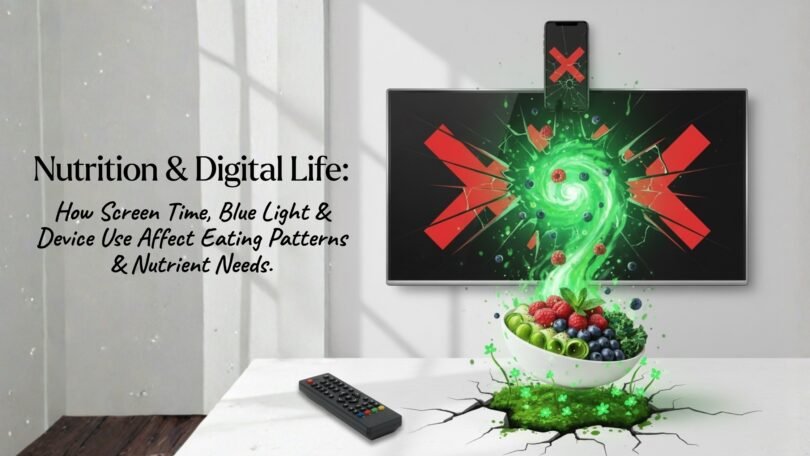

In today’s world, our phones, laptops, and tablets have become extensions of our hands. From morning alarms to Netflix nights, we are constantly surrounded by screens. While technology has made life efficient, it has silently reshaped the way we eat, the nutrients we crave, and even the way our body processes food.
As a nutritionist, I see this pattern every single day — clients who skip meals because they’re busy on screens, people who mindlessly snack while scrolling, and professionals whose sleep gets affected by late-night blue light exposure. The digital era is changing our nutrition needs, and understanding this connection is the first step toward healthier habits.
This article breaks down the science in simple language so you can understand how screen time affects your appetite, metabolism, cravings, digestion, and nutrient requirements — and most importantly, what you can do to fix it.
How Screens Change the Way We Eat: The Digital–Nutrition Connection
In a world where screens follow us everywhere — from the dining table to the bed — one of the biggest nutritional challenges we face is the slow disappearance of mindful eating. Eating used to be a sensory-rich, conscious activity. But today, for many people, food is something consumed “in the background” while scrolling, watching, replying, or streaming. And this shift has a direct impact on how the body regulates hunger and fullness.
Your body has a smart, in-built system that uses hormones, nerves, and sensory input to help you understand when to eat and when to stop. But here’s the catch:
This system only works when the brain is fully present.
When you involve a screen, your attention is pulled away from your plate — and your natural hunger cues fall out of sync.
1. How Distraction Breaks the Brain–Stomach Connection
Eating while using a phone or watching something forces your brain to multitask. It’s simultaneously trying to process digital content and food intake — and the screen ALWAYS wins.
Instead of focusing on:
- chewing
- Taste
- Texture
- Aroma
- Your body’s fullness signals
your brain becomes occupied with:
- The next reel
- The next scene
- The next message
- The next notification
This means your brain cannot fully register the amount of food entering your body.
So even when your stomach is full, your brain doesn’t receive that message on time.
This is why screen-eating often leads to overeating — silently, subconsciously, and automatically.
The Biology Behind Mindless Snacking
When you eat mindfully, hormones like ghrelin (which increases hunger) and leptin (which signals satiety) work in a balanced rhythm. But when distractions take over:
- You eat faster, preventing hormones from keeping up
- You chew less, slowing digestion and delaying fullness
- You taste less, reducing sensory satisfaction
- You forget how much you’ve eaten because your brain wasn’t recording the experience
The result?
Your body consumed food, but your brain feels like the meal never “happened.”
This is why you may find yourself looking for snacks soon after a full meal eaten while watching something.
The Sensory Disconnect: Why You Don’t Feel Full
Mindful eating is multisensory. Your brain relies on:
- Sight
- Taste
- Smell
- Texture
- Even sound (the crunch of vegetables or nuts) to determine satiety.
But when you’re absorbed in a screen, these senses become secondary. Food becomes a background activity, something your hand reaches for automatically rather than intentionally.
Without sensory engagement, the meal doesn’t register psychologically — so hunger returns quickly.
The Dopamine Trap: Why Screens Make You Eat Without Thinking
Screens — especially social media — run on dopamine. Every scroll, ping, or new piece of content gives your brain a tiny reward. Food also releases dopamine. Together, they create a powerful loop:
Scroll → Snack → Enjoy dopamine → Repeat
Over time, your brain learns that eating and screen time go together. You build subconscious associations such as:
- TV = snacks
- Instagram = munching
- Gaming = chips
- Bedtime scrolling = late-night cravings
This conditioning makes eating automatic, not intentional.
Portion Blindness: How Screens Make You Eat More Than You Realize
Because your attention is elsewhere, you stop noticing:
- How much food is left in the plate
- How many times your hand reaches into the snack packet
- How full or empty your stomach feels
This is called portion blindness, and it’s one reason digital distraction is linked to higher calorie intake — sometimes 20–50% more in a single meal.
You’re not overeating because you’re hungry.
You’re overeating because you’re not paying attention.
Long-Term Impact on Your Eating Behaviour
When screen-eating becomes a habit, several changes begin to creep in:
- You start eating out of boredom instead of hunger
- You snack more frequently
- You crave highly palatable foods like chips, desserts, or fried items
- You lose the ability to recognise when you’re full
- You stop tasting and enjoying food
- You need bigger portions to feel satisfied
- You may experience bloating, acidity, and poor digestion
Most importantly, your natural hunger cues become dull, and artificial cues — like emotions or digital triggers — take over.
The Big Picture: Why This Matters
We often think overeating comes from lack of discipline. But in reality, it is largely driven by distraction. Eating with screens disconnects your brain from your stomach, delays fullness signals, and trains your body to eat without intention.
This shift is subtle, but over weeks, months, and years, it changes:
- your eating rhythm
- your food choices
- your relationship with food
- your long-term metabolic health
2. Blue Light Alters Hunger Hormones — Increasing Cravings, Late-Night Eating & Metabolic Imbalance
Most people think blue light is only a “sleep disruptor,” but as a nutritionist, I see something far more significant: blue light directly influences hunger, cravings, metabolism, and the timing of your meals. In today’s lifestyle, where evenings are spent with phones, laptops, tablets, and TVs glowing in front of us, blue light exposure has quietly reshaped our eating patterns — especially after sunset.
To understand this, imagine your body as a natural biological clock. This clock relies on light cues to decide when to produce hunger hormones, when to digest food efficiently, and when to wind down. But digital screens send the wrong signals at the wrong time.
How Blue Light Confuses the Brain Into Thinking It’s Still Daytime
Your brain uses light detected by your eyes to understand the time of day. Warm, soft evening light tells the body to rest. But blue light — the intense, stimulating wavelength emitted by screens — mimics broad daylight.
When you scroll at night, your brain receives a message:
“It’s daytime. Stay alert. Stay energized.”
This disrupts your natural circadian rhythm — your body’s internal 24-hour clock that controls hunger, metabolism, digestion, and sleep.
What Happens to Your Hunger Hormones When Blue Light Interferes
1. Melatonin drops sharply
Melatonin is not just a sleep hormone — it’s also a metabolic regulator. It tells your body to slow digestion and stop craving energy.
When blue light blocks melatonin:
- Your brain struggles to wind down
- Your digestive system stays active
- Your hunger cues remain “switched on”
This is why nighttime scrolling often comes with a desire to snack, even after a full dinner.
2. Ghrelin (the hunger hormone) increases
Blue light stimulates alertness, which in turn increases ghrelin levels. Ghrelin makes you feel:
- Hungry
- Snacky
- Craving something “quick and tasty”
And since this often happens at night, you reach for:
- Chips
- Sweets
- Biscuits
- Instant noodles
- Leftover desserts
- Sugary beverages
These foods satisfy the immediate craving but disrupt your metabolic balance.
3. Leptin (the fullness hormone) decreases
Low leptin means your brain struggles to recognise satiety.
So even if you ate your dinner properly, blue light exposure can trick your body into feeling like you haven’t eaten enough.
This is one reason many people become “night eaters” without understanding why.
Why Late-Night Blue Light Leads to Cravings for Sugary & Carb-Rich Foods
When the brain is in alert mode at night and digestion is not supposed to be active, it demands quick energy.
Blue light + suppressed melatonin + increased ghrelin =
Cravings for fast energy sources: sugar and carbs.
This is why you’re more likely to crave:
- Sweets
- Chocolate
- Bread
- Noodles
- Chips
- Fried Snacks
Your body isn’t asking for nutrition — it’s asking for emergency fuel to match the false “daytime signal” caused by blue light.
How This Disrupts Your Night-Time Metabolism
Your metabolism is programmed to slow down at night. This is when the body:
- Repairs tissues
- Boosts immunity
- Stabilizes blood sugar
- Detoxifies
- Processes nutrients
But eating late due to blue-light-driven cravings forces your body to digest food at a time when it should be resting.
This leads to:
- Poor digestion
- Acidity and bloating
- Elevated nighttime glucose
- Poor insulin response
- Weight gain around the belly
- Disturbed sleep cycles
Over time, this becomes a vicious cycle.
The Screen-Snacking Cycle That Blue Light Creates
- You scroll at night
- Blue light blocks melatonin
- You feel alert instead of sleepy
- Alertness triggers false hunger
- Ghrelin rises → cravings increase
- You snack
- You stay awake longer
- You snack again or overeat
- Your sleep becomes poor
- Poor sleep increases cravings the next day
Your body gets stuck in a loop that begins with a simple habit: night-time screen use.
How Evening Screens Shift Your Whole Eating Schedule
Consistent night-time blue light exposure can shift your natural hunger rhythm entirely:
- You don’t feel hungry in the morning
- You skip breakfast
- You crave caffeine or sugar for energy
- Your afternoon hunger increases
- Your evening cravings peak
- Post-dinner snacking becomes routine
This pattern is a sign that your circadian rhythm is out of sync, and blue light is often the culprit.
Long-Term Effects on Nutrient Needs & Metabolism
Chronic night-time blue light exposure can lead to:
- Increased appetite overall
- Greater preference for high-calorie foods
- Reduced insulin sensitivity
- Higher inflammation
- Weight gain
- Sluggish morning metabolism
- Increased need for magnesium, B-vitamins, antioxidants
- Poor nutrient utilisation due to irregular digestion
In short, blue light changes not just what you eat but also how your body processes what you eat.
The Bigger Picture
Screens aren’t inherently bad — the problem is timing and exposure. Blue light at night tells the brain the wrong story about the time of day, disrupting hunger hormones, increasing cravings, and pushing you toward late-night snacking. Over weeks and months, this pattern reshapes your metabolism and your daily relationship with food.
This is why understanding blue light is no longer just a sleep conversation—
It is now a nutrition conversation, directly linked to appetite, weight, cravings, digestion, and hormonal health.
3.Social Media Creates Food FOMO — Triggering Cravings You Don’t Actually Feel
In today’s digital world, food is no longer just something we cook or eat — it has become a form of entertainment. From Instagram reels showing cheese pulls and chocolate swirls to YouTube vlogs featuring oversized burgers and street food tours, social media platforms are overflowing with visually stimulating food content. While these videos seem harmless, they influence your eating behaviour far more deeply than you realise.
Social media doesn’t just show you food;
it activates your senses, changes your cravings, and creates hunger where there is none.
This is what we call food FOMO (Fear of Missing Out).
Why Your Brain Reacts So Strongly to Food Content
Your brain is wired to respond instantly to images of food. This comes from primitive survival instincts—our ancestors needed to identify high-energy foods quickly. So when you see food content today:
- your brain becomes alert
- your reward system activates
- dopamine (the craving hormone) rises
- your mouth may even start salivating
- your appetite increases automatically
And this happens even when your stomach is full.
Food content hijacks biology, not hunger.
The Visual Hunger Mechanism: How Seeing Food Makes You Want It
Social media uses high-definition visuals, slow-motion shots, and close-up angles that exaggerate the appeal of food. These visuals trigger something known as “visual hunger.”
This means:
- You feel like eating just because your eyes saw delicious food
- Hunger becomes psychological, not physical
- Cravings feel urgent even when you ate recently
Visual hunger is powerful because the brain often cannot differentiate between:
- “I saw food”
And
- “I need food”
This is why a 10-second cheese-pulling reel can override your appetite signals.
How Food FOMO Develops: The Psychology Behind It
Food FOMO is not about real hunger — it’s about comparison and desire.
When you see others enjoying:
- Waffles
- Pizza
- Ice-cream
- Loaded fries
- Trendy desserts
- Calorie-loaded drinks
your brain automatically generates the thought:
“I want that too.”
This happens because social media makes food look:
- Abundant
- Accessible
- Instantly available through delivery apps
The moment you see something tempting, your brain imagines the taste, the pleasure, the reward — and you crave it immediately.
Why Social Media Makes Your Cravings Feel Stronger
Social platforms use algorithms that push more of what you watch.
So if you see one food reel, suddenly your feed becomes:
- Food vlogs
- Cooking videos
- Restaurant videos
- Dessert reels
- “What I Eat in a Day” clips
This constant exposure amplifies cravings and normalises frequent snacking.
The more you see food, the more you want food.
And with delivery apps being just a tap away, cravings quickly convert into orders, not just thoughts.
How This Affects Your Daily Eating Pattern
Social media exposure affects not just what you eat, but when and how often you eat.
1. You eat even when you’re not hungry
Hunger becomes emotionally triggered rather than biologically triggered.
2. You crave more calorie-dense foods
The platform pushes foods that are visually exciting — creamy, cheesy, sugary, fried.
3. You feel unsatisfied with regular, homemade meals
Simple foods may suddenly feel “boring” compared to what you saw online.
4. You snack while scrolling
Your hand automatically reaches for food as part of your “dopamine routine.”
5. You normalise overeating
Huge portions shown online shift your perception of a normal serving size.
The Dopamine–Food Content Loop
Food reels are designed to be addictive. They give your brain tiny rewards — dopamine hits — with every satisfying visual. Your brain then tries to recreate that pleasure by:
- craving similar foods
- wanting to order something immediately
- overeating to match the excitement seen online
This creates a loop:
See food → crave food → eat food → seek more food content → crave again
Over time, this loop conditions your appetite to be controlled by social media, not your body.
The Comparison Trap: “If They Can Eat It, So Can I”
Influencers often post:
- Massive cheat meals
- High-calorie desserts
- Large restaurant portions
- Indulgent street food
- Oversized fast food combos
But what you don’t see is:
- Their real portion sizes
- What they eat daily
- How much they leave on the plate
- Their metabolism, activity level, or lifestyle
- That many of these videos are staged
Your brain, however, believes these meals are normal.
This makes you:
- Question your own meals
- Crave indulgence more frequently
- Feel dissatisfied with healthier options
- Justify overeating by comparing yourself with influencers
When Cravings Become Habit, Not Hunger
The more you consume food content, the more your brain links social media with eating. Eventually, you start snacking automatically whenever you scroll.
You’re not eating because you’re hungry.
You’re eating because the content triggered you.
This leads to:
- Frequent snacking
- Increased calorie intake
- Emotional eating
- Boredom eating
- Sugar–salt cravings
- Disrupted hunger patterns
The Long-Term Impact of Social-Media-Driven Cravings
Over time, “food FOMO” changes your behaviour and metabolism:
- You crave high-calorie foods more often
- Your taste preferences shift to more intense flavours
- You lose satisfaction from simple, wholesome meals
- You rely more on delivery apps
- You eat late at night because of sudden cravings
- You experience more digestive issues
- Weight gain becomes easier due to unnecessary snacking
Social media exposure doesn’t just shape cravings — it reshapes your entire relationship with food.
The Bigger Picture
Food content on social media is designed to be irresistible. The visuals stimulate your brain, override hunger signals, encourage cravings, and push you toward indulgent choices you didn’t plan for. This isn’t about lack of willpower — it’s about a digital environment that constantly tempts your senses and manipulates your appetite.
Understanding this digital–nutrition connection is essential today, because food FOMO has become a modern trigger for overeating, emotional eating, and distorted eating patterns.
4. Multitasking With Screens Reduces Meal Satisfaction — Making You Eat More Without Realizing It
In today’s digital lifestyle, most of us eat while doing something else—checking WhatsApp, replying to emails, watching reels, scrolling updates, or working on laptops. We call it “multitasking,” but for the human brain, it is actually constant attention switching, not true multitasking. And when this switching happens during meals, something very important gets lost: satisfaction.
Meal satisfaction is not just about taste—it’s about presence, sensory awareness, memory, and emotional fulfillment. When screens enter mealtime, all these elements drop dramatically.
Let’s break it down.
a) Divided Attention = Divided Enjoyment
Your brain has a limited “attention budget.”
When a screen takes 70–80% of your attention, only a tiny portion is left for your food.
This means:
- You don’t fully taste your meal.
- You don’t enjoy textures, flavors, or aromas.
- You miss out on the calming experience of eating.
Even if you eat a delicious dish, it feels “okay,” not “satisfying,” because the brain is too busy processing digital information instead of sensory signals from food.
This lack of sensory engagement is the first step toward overeating.
b) Low Satisfaction Makes the Brain Seek More Food
When your brain doesn’t register enjoyment, it assumes you haven’t eaten enough.
So what happens next?
- You start looking for something sweet after a meal.
- You crave a snack even after a full lunch.
- You feel “unsatisfied,” but you can’t explain why.
This happens because satisfaction is not just physical fullness — it’s also sensory and emotional fullness. Screens suppress this emotional component, pushing you to keep eating to “complete the meal experience.”
c) Screen Multitasking Weakens the Brain’s Meal Memory
After every meal, the brain creates a “memory trace” of what you ate — taste, quantity, aromas, satisfaction level, the feeling of fullness. This helps regulate hunger later.
But multitasking disrupts meal-related memory formation.
Without this memory:
- You feel hungry again sooner.
- You forget you had a full meal.
- You overestimate your hunger levels.
The brain didn’t record the meal properly, so it triggers hunger again—even when your stomach is actually full.
This is why distracted eaters snack more frequently.
d) Screens Reduce Chewing Awareness — Leading to Overeating
When you multitask, you chew faster and swallow bigger bites without noticing.
Why does this matter?
Because chewing is the start of digestion and also sends satiety signals to the brain.
Less chewing = Less satiety.
You finish the meal quickly, without the natural pause that allows fullness signals to catch up. Your brain then misjudges how much you’ve eaten, leading to:
- Extra portions
- Second rounds
- Dessert cravings
It isn’t greed — it’s physiology.
e) Emotional Satisfaction Drops — Food Becomes “Flat”
Meals are meant to be emotionally grounding.
When you disconnect from food and stay connected to a screen, you remove the emotional pleasure of eating, such as:
- Comfort
- Pleasure
- Calmness
- Gratitude
- Sensory joy
Without this emotional satisfaction, your brain keeps searching for something “more.”
Ironically, this “more” usually means more food.
f) Screens Make You Eat Faster Than Your Satiety Hormones Can Respond
Your satiety hormone leptin and fullness sensors need time to activate.
But multitasking makes you:
- Eat faster
- Chew less
- Swallow Quickly
- Finish the meal without pausing
Fast eating prevents the leptin response from kicking in.
So you’re physically full but don’t feel full — increasing the urge to continue eating.
g) Multitasking Trains Your Brain to Pair Food With Screens
The more you combine screens + food, the more your brain sees them as a package deal.
This leads to:
- craving snacks whenever you sit with your phone
- feeling uncomfortable eating without a screen
- automatic eating during scrolling
- binge-eating while watching shows
This habit loop makes satisfaction dependent on screen stimulation, not on the food itself.
As a result, even real hunger and real satiety become difficult to recognise.
Final Connection
When screens divide your attention, they divide your satisfaction.
When satisfaction is missing, you eat more, crave more, remember less, and digest less effectively.
Multitasking during meals doesn’t save time — it steals nutrition.
To feel truly full, truly nourished, and truly in control of your eating habits, your brain and your plate must be in the same place at the same time.
How Digital Life Affects Your Nutrition Needs
We often talk about how screens affect our habits — late-night eating, cravings, overeating — but what we rarely discuss is that your nutrition needs themselves change when your life becomes more digital.
Long hours of screen exposure, reduced physical activity, higher stress, disrupted sleep, and constant digital overload all put completely different demands on your body.
In short:
Your body needs different nutrients today compared to 10–15 years ago because your lifestyle has changed dramatically.
Let’s break it down in a truly holistic way.
1. Digital Fatigue Increases the Need for Brain-Supporting Nutrients
Your brain is the biggest energy consumer in your body, and screens push it into continuous processing mode. Whether you’re scrolling, typing, editing, multitasking, or watching, your brain is always ON.
This increases the demand for:
✔ Omega-3 Fatty Acids
Why?
They support eye health, reduce inflammation, and keep the brain calm and focused.
Low levels →
Eye strain, poor focus, irritability, mental fatigue.
✔ B-Complex Vitamins (B6, B9, B12)
Why?
They support energy metabolism, concentration, nerve health, and cognitive performance.
Long screen hours drain these faster.
✔ Iron
Why?
Your brain uses iron to maintain alertness and concentration.
Digital overload + low iron =
foggy thinking, headaches, tiredness.
2. Blue Light Exposure Raises Requirement for Antioxidants
Constant blue light exposure increases oxidative stress on your eyes and skin.
This means your body needs more antioxidants to neutralize free radicals.
The nutrients your body demands more of:
✔ Vitamin C & Vitamin E
Protects skin from digital aging and reduces cellular stress.
✔ Lutein & Zeaxanthin
These are “natural filters” against blue light — they protect the retina.
Low intake →
eye strain, dryness, sensitivity to brightness.
✔ Beta-carotene & Vitamin A
Critical for night vision and eye moisture.
Screen-heavy users lose more of these nutrients daily.
3. Digital Stress Depletes Calming and Anti-stress Nutrients
Screen notifications, deadlines, multitasking, and constant dopamine hits create digital stress.
Your stress hormones (especially cortisol) use up several nutrients at a higher rate.
The most affected nutrients:
✔ Magnesium
The first mineral your body burns under stress.
Low magnesium →
anxiety, sleep issues, muscle tension, headaches, cravings.
Screens + stress = chronic magnesium depletion.
✔ Vitamin B5 & B6
These support adrenal glands (your stress control center).
Low B vitamins →
low stress tolerance, mood swings, irritability.
✔ Omega-3
Reduces inflammation and calms the nervous system.
Digital stress increases inflammation → higher omega-3 requirement.
4. Poor Sleep From Screen Use Changes Appetite Hormones and Nutrient Needs
Late-night screen time reduces melatonin, disrupts sleep, and throws hunger hormones out of balance.
This increases your need for:
✔ Protein
To stabilize appetite hormones
→ Helps control cravings
→ Improves morning energy
→ Keeps you full longer
✔ Slow-digesting carbs
Like oats, millets, sweet potato
→ Balance ghrelin & leptin
→ Reduce late-night cravings
✔ Melatonin-supporting nutrients
Such as magnesium and vitamin B6.
Screens suppress melatonin; food must compensate.
5. Sedentary Digital Life Requires Better Blood Sugar Management Nutrients
Sitting all day + screens = slower metabolism + higher blood sugar spikes.
This increases your need for nutrients that support glucose control and metabolism:
✔ Chromium
Regulates insulin and sugar cravings.
✔ Zinc
Improves insulin sensitivity.
✔ Fiber
Prevents sugar spikes during long sitting (screens slow digestion and metabolism).
✔ Protein
Prevents energy crashes and snacking.
6. Digital Dehydration Increases the Need for Fluids & Electrolytes
Most people never realize this:
Screens naturally reduce blinking and dull your thirst signals.
Digital life causes:
- Dry eyes
- Reduced saliva
- Dehydration headaches
- Fatigue
- Constipation
This increases your need for:
✔ Water (more than the usual 8 glasses)
Screen users need at least 10–12 glasses daily.
✔ Electrolytes (sodium, potassium, magnesium)
Because long sitting and digital stress alter fluid balance.
✔ Herbal teas for eye & brain hydration
Chamomile, tulsi, mint, fennel.
7. Poor Posture from Screens Increases Need for Bone & Muscle Nutrients
Forward neck posture, hunched spine, stiff shoulders →
all create postural stress.
This increases the body’s requirement for:
✔ Vitamin D
For bone and muscle strength.
✔ Calcium
Prevents stiffness, nerve pressure, and muscle spasms.
✔ Magnesium
Reduces muscle tension from long sitting.
✔ Protein
Maintains muscle mass when activity levels drop.
8. Digital Overeating Raises the Need for Digestive Support
Screens cause:
- mindless eating
- fast eating
- overeating
- late-night snacking
- poor chewing
This increases the need for:
✔ Probiotics
To restore gut balance.
✔ Digestive enzymes (from fruits like papaya & pineapple)
To improve digestion after heavy or distracted meals.
✔ High-fiber foods
To support regular bowel movements.
9. Long Screen Hours Increase Inflammation — Raising the Need for Anti-inflammatory Foods
Digital lifestyle increases:
- oxidative stress
- blood sugar fluctuations
- poor sleep
- high cortisol
All these cause chronic low-grade inflammation.
This increases the need for:
✔ Turmeric (curcumin)
Powerful anti-inflammatory.
✔ Omega-3s (fish, chia, flaxseed)
Reduce inflammation in the brain, gut, and joints.
✔ Green leafy vegetables
Rich in phytonutrients.
✔ Fruits high in antioxidants (berries, citrus, pomegranate)
To reduce inflammation from digital load.
10. Digital Lifestyle Reduces Sun Exposure — Increasing the Need for Vitamin D
Working indoors + screens = less sunlight.
This leads to Vitamin D deficiency, which affects:
- mood
- immunity
- metabolism
- bone strength
- hormone balance
Digital-heavy individuals require:
- more Vitamin D
- more calcium
- more magnesium
- more movement
Healthy Nutrition Tips for a High Screen-Time Lifestyle
Spending long hours on laptops, phones, and tablets has become the new normal — especially for corporate professionals, students, creators, and work-from-home individuals. While we often talk about screen time affecting the eyes and sleep, very few realise how closely it is tied to our nutritional needs and eating behaviour.
Here are deeply explained, practical nutrition strategies designed specifically for people with high screen-time routines:
1. Start Your Day With a Screen-Free Breakfast
A high-screen lifestyle often starts with checking emails the moment your eyes open. But eating your first meal while scrolling affects both digestion and appetite regulation.
- A screen-free breakfast improves chewing, digestion, and satiety, helping your body register fullness.
- It reduces the morning cortisol spike, which otherwise increases cravings for sugary, carb-heavy foods.
- A mindful morning meal (like eggs + whole grains, or dal + vegetable cheela) stabilises blood sugar and reduces emotional snacking later in the day.
Tip: Keep your phone charging in another room until breakfast is over.
2. Follow the “20/20 Hydration Rule” to Fight Digital Dehydration
Screens reduce our natural thirst cues — your brain is too occupied to signal dehydration.
- Long screen sessions also increase eye strain, which worsens if body fluids are low.
- Mild dehydration reduces concentration, making you crave quick energy foods like biscuits, chips, and sugary drinks.
How to apply the rule:
Every 20 minutes, take 2–3 sips of water.
This mimics natural thirst cues that screens suppress.
3. Prioritise Anti-Inflammatory Foods to Counter Blue-Light Stress
High exposure to blue light increases oxidative stress, eye fatigue, and even headaches.
Your nutritional needs shift slightly upwards, especially for:
- Antioxidants (vitamin C, vitamin E, beta-carotene)
- Omega-3 fatty acids (reduce inflammation and support eye health)
- Polyphenols (counter blue-light–induced stress)
Best foods for screen-heavy individuals:
- Berries, citrus fruits
- Spinach, kale, amla
- Nuts and seeds
- Green tea, turmeric milk
- Fatty fish, walnuts, flaxseeds
These nutrients act as a protective shield for your brain, eyes, and cells.
4. Plan “Screen-Free Eating Windows” to Restore Appetite Control
Constant screen use during meals disrupts leptin (fullness hormone) and ghrelin (hunger hormone). You need intentional breaks.
Try this rule:
⏱️ Every 3–4 hours, take a 15–20 minute screen-free break for eating.
- Helps your brain reconnect with hunger and fullness cues
- Reduces overeating caused by distraction
- Improves digestion by activating the parasympathetic system
This one habit alone can prevent unnecessary calorie intake.
5. Build Eye-Friendly Plates Rich in Lutein & Zeaxanthin
High screen exposure strains the retina. Diet can compensate for this increased demand.
Include foods naturally rich in eye-protective nutrients:
- Lutein & Zeaxanthin: spinach, corn, peas, avocado
- Vitamin A: carrots, pumpkin, sweet potatoes
- Zinc: chickpeas, pumpkin seeds, cashews
These nutrients support visual endurance and reduce screen-related eye fatigue.
6. Choose Slow-Release Carbs to Support Long Work Hours
Screens demand constant mental alertness. Sudden crashes can trigger snacking.
Pick foods that provide stable energy:
- Oats, ragi, jowar, brown rice
- Whole grains instead of refined
- Dal + sabzi-based meals
- Protein + fiber combination snacks like chana, sprouts chaat, boiled eggs, fruit + nuts
Balanced carbs prevent the “3 PM digital slump” that drives you to junk food.
7. Use Portion-Control Strategies That Work With Screens — Not Against Them
If you have to eat near screens (meetings, deadlines), structure it safely:
- Keep snacks in small bowls, not whole packets
- Don’t store food on your work desk
- Pre-portion trail mix, makhana, popcorn, chana
- Use a water bottle with timing markers
These help override unconscious overeating triggered by screen distraction.
8. Increase Magnesium-Rich Foods to Reduce Tech-Induced Stress
Long screen time raises mental load and increases cortisol.
Magnesium helps with:
- Relaxation
- Muscle tension (especially neck/shoulders)
- Sleep cycle regulation
Best sources for digital workers:
- Bananas
- Dark leafy greens
- Pumpkin seeds
- Almonds
- Ragi
- Besan, dals
A simple magnesium-rich evening snack can improve sleep quality and reduce nighttime cravings.
9. Eat Every 3–4 Hours to Prevent Screen-Triggered Hypoglycemia
Many people skip meals because they forget to eat while working, leading to:
- Irritability
- Headaches
- Low focus
- Impulsive junk cravings
Set meal reminders on your phone so that your nutrition supports your productivity — not the other way around.
10. Your Last Meal Should Be Digital-Detox-Friendly
Night blue light suppresses melatonin, affects digestion, and slows metabolism.
A screen-free dinner:
- Improves nutrient absorption
- Reduces bloating and acid reflux
- Helps cortisol drop naturally
- Improves sleep, which also improves appetite control next day
Keep your last meal light:
Khichdi, dal + rice, soup + veggies, paneer sabzi + roti.
Conclusion
The truth is simple: we don’t just live in a digital world — we eat in it, think in it, and make most of our food decisions in it.
And screens silently shape these decisions every single day.
From distracted meals and mindless snacking to blue-light–driven stress, altered hunger hormones, and disrupted sleep, our devices influence far more than just our eyes and posture. They affect how often we eat, what we crave, how satisfied we feel, and even what nutrients our bodies need more of.
But here’s the empowering part:
You don’t have to choose between your digital lifestyle and your nutrition goals.
Both can co-exist smoothly — if you understand how to support your body in a high-screen environment.
By setting screen-free eating windows, choosing eye-protective foods, hydrating intentionally, prioritising protein and anti-inflammatory nutrition, and creating mindful routines around your devices, you reclaim control over your appetite, energy, and health.
In the end, it’s not about eliminating screens — it’s about using them wisely while nourishing your body smartly.
Your nutrition must evolve with your lifestyle.
And in a world where work, entertainment, and connection all happen through screens, taking care of your food choices is no longer optional — it’s essential.
Healthy digital living begins with healthy eating.
Guard your body, fuel your mind, and let nutrition be the balance your screen-centered life needs
FAQs
1. How does screen time affect my hunger and appetite?
Long screen hours distract your brain from recognising hunger cues, making you eat mindlessly or skip meals unintentionally.
2. Can blue light really increase food cravings?
Yes. Blue light increases stress hormones and disrupts sleep, which leads to higher cravings for sugar and junk foods.
3. What nutrients do I need more of if I use screens daily?
Antioxidants, omega-3s, magnesium, vitamin A, lutein, and hydration become more important for screen-heavy lifestyles.
4. Why do I snack more when I’m using my phone or laptop?
Screens shift attention away from eating, making it easier to overeat without realising how much you’ve eaten.
5. Does screen time affect digestion?
Yes. Eating while distracted reduces chewing, slows digestion, and weakens the body’s natural fullness signals.
6. How can I reduce mindless snacking during work or scrolling?
Use pre-portioned snacks, keep food off your work desk, and follow screen-free meal windows.
7. What are the best foods for eye health in high screen time?
Spinach, carrots, eggs, corn, berries, walnuts, fatty fish, and pumpkin seeds support eye protection and reduce strain.
8. Can long screen time increase dehydration?
Yes. Screens distract your brain from thirst cues, leading to “digital dehydration” and fatigue.
9. What is a healthy meal routine for someone with high screen exposure?
Eat every 3–4 hours, include protein in every meal, stay hydrated, and have screen-free meals to regulate appetite.
10. Does digital overstimulation affect sleep and nighttime eating?
Blue light suppresses melatonin, causing late-night cravings and poor sleep, which further disrupts appetite next day.