
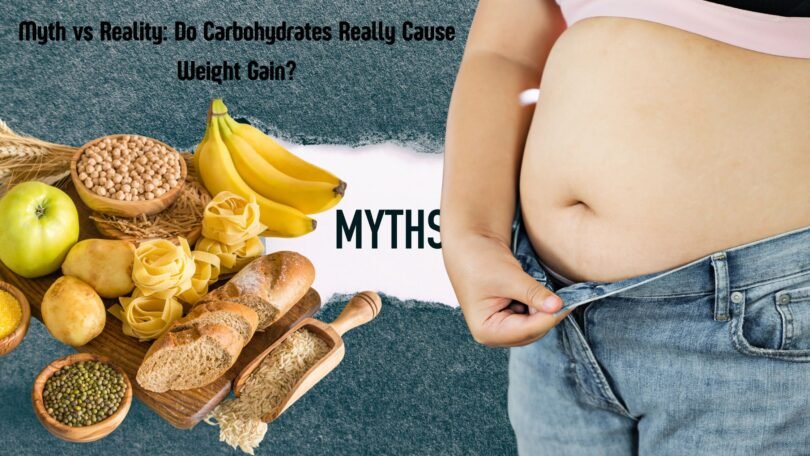

Carbohydrates are one of the most misunderstood nutrients in modern nutrition. Over the years, they’ve been blamed for weight gain, belly fat, diabetes, and even poor metabolism. From keto trends to “no-carb” diets, carbs are often painted as the villain in weight management.
But is this belief supported by science—or is it another nutrition myth?
Let’s separate myth from reality and understand what carbohydrates truly do for the body.
The Myth: “Carbohydrates Make You Fat”
The common belief is simple:
- Eat carbs → blood sugar spikes → fat storage → weight gain
This idea has led many people to completely eliminate foods like rice, roti, fruits, and even vegetables from their diets. While short-term weight loss may occur with carb elimination, the long-term effects often include fatigue, cravings, muscle loss, and metabolic slowdown.
The truth is more Thoughtful.
The Reality: Calories and Quality Matter More Than Carbs Alone
Weight gain occurs when calorie intake consistently exceeds calorie expenditure, regardless of whether those calories come from carbs, fats, or proteins.
Carbohydrates do not automatically turn into fat. The body first uses carbs as:
- Immediate energy
- Fuel for the brain
- Support for physical activity
Excess calories—from any source—can contribute to weight gain.
Understanding Different Types of Carbohydrates
Not all carbs behave the same way in the body.
Refined Carbohydrates

- White bread, bakery items, sugary foods
- Quickly digested
- Cause rapid blood sugar spikes
- Increase hunger soon after eating
Complex Carbohydrates

- Whole grains, millets, legumes, fruits, vegetables
- Rich in fiber
- Slow digestion
- Provide long-lasting energy and fullness
Blaming all carbs because of refined foods is like blaming all fats because of fried snacks.
Why Carbs Are Essential for Metabolism
Carbohydrates play a key role in maintaining:
- Stable energy levels
- Thyroid function
- Hormonal balance
- Muscle performance
Low-carb diets often lead to:
- Muscle loss
- Reduced workout performance
- Increased stress hormones
- Slower metabolism over time
A sluggish metabolism makes weight management harder, not easier.
Insulin: The Most Misunderstood Hormone

Insulin is often blamed for fat gain, but its primary role is to:
- Help glucose enter cells
- Provide energy
- Prevent muscle breakdown
Insulin becomes problematic only when:
- Diets are high in refined carbs and sugar
- Physical activity is low
- Meals lack protein and fiber
Balanced carb intake does not automatically lead to insulin resistance.
Carbohydrates and Fat Storage: The Truth
Carbs are stored as glycogen in muscles and the liver. Fat storage occurs mainly when:
- Glycogen stores are full
- Total calorie intake is excessive
- Physical activity is insufficient
Active individuals and those eating balanced meals often utilize carbs efficiently rather than storing them as fat.
Why Low-Carb Diets Show Quick Weight Loss
Many people lose weight quickly on low-carb diets, but much of this is due to:
- Water loss (glycogen holds water)
- Reduced calorie intake
- Limited food choices
Once normal eating resumes, weight regain is common if habits haven’t changed.
Timing and Pairing Matter More Than Elimination
Carbohydrates work best when:
- Paired with protein and healthy fats
- Consumed around physical activity
- Spread evenly across meals
For example:
- Rice with dal and vegetables
- Roti with paneer or curd
- Fruit with nuts or seeds
This approach supports blood sugar balance and prevents overeating.
Who May Need to Adjust Carb Intake?
Some individuals may benefit from carb modification, not elimination:
- People with insulin resistance
- Those with sedentary lifestyles
- Individuals with poor meal timing
In such cases, focusing on portion size, food quality, and meal structure is more effective than complete restriction.
The Psychological Cost of Carb Fear
Labeling carbs as “bad” often leads to:
- Food guilt
- Binge-restrict cycles
- Poor relationship with food
- Long-term diet failure
Sustainable weight management requires trust in food, not fear.
The Balanced Approach to Carbohydrates
The healthiest approach includes:
- Choosing whole, fiber-rich carbs
- Avoiding frequent refined carbs
- Eating carbs mindfully
- Matching intake with activity level
Carbs are not the enemy. Unbalanced eating habits are.
Conclusion
Myth: Carbohydrates cause weight gain
Reality: Excess calories, poor food quality, and sedentary habits cause weight gain
Carbohydrates, when chosen wisely and eaten in balance, support metabolism, energy, and long-term health.
Instead of asking, “Should I stop eating carbs?”
Ask, “Am I eating the right carbs, in the right amount, at the right time?”
That’s where real results begin.
FAQs
1. Do carbohydrates really cause weight gain?
No. Carbohydrates themselves do not cause weight gain. Excess calories over time—regardless of the source—lead to weight gain.
2. Are carbohydrates unhealthy for weight loss?
No. When eaten in proper portions and from whole food sources, carbohydrates support energy levels and sustainable weight loss.
3. Which carbohydrates are more likely to cause weight gain?
Refined carbohydrates such as sweets, sugary drinks, white bread, and bakery items are more likely to contribute to weight gain when eaten frequently.
4. Do carbohydrates turn directly into body fat?
No. Carbohydrates are first used for energy or stored as glycogen. Fat storage occurs mainly when overall calorie intake is excessive.
5. Is insulin responsible for fat gain from carbs?
Insulin helps move glucose into cells for energy. It becomes a problem only when calorie intake is consistently high and activity levels are low.
6. Why do low-carb diets show fast results initially?
Early weight loss is mainly due to water loss and reduced calorie intake, not long-term fat loss.
7. Are fruits fattening because they contain sugar?
No. Fruits contain natural sugars along with fiber, vitamins, and antioxidants that support metabolism and appetite control.
8. Should carbohydrates be avoided at dinner or night?
No. Meal balance matters more than timing. A balanced meal at night does not cause weight gain.
9. Who should be more mindful about carbohydrate intake?
People with insulin resistance, sedentary lifestyles, or metabolic issues may need portion control, not complete elimination.
10. What is the healthiest way to eat carbohydrates?
Choose whole, fiber-rich carbs, pair them with protein and healthy fats, and adjust portions based on activity level.