
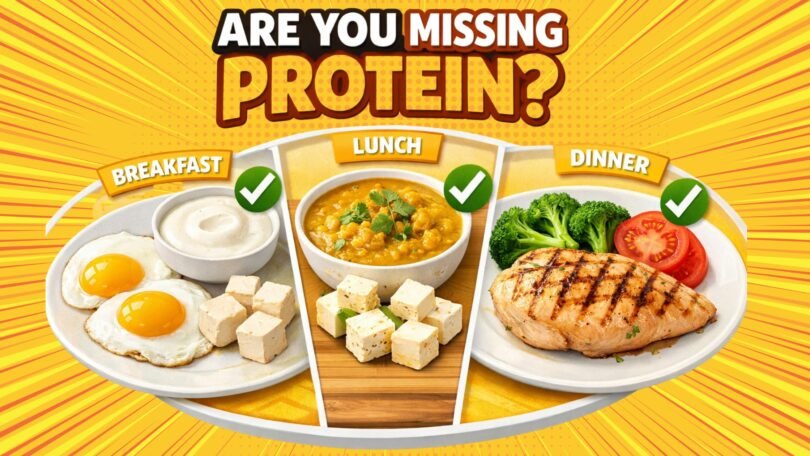

Protein is often misunderstood.
For many people, it exists only in gym conversations, diet plans, or weight-loss programs. If someone isn’t actively trying to build muscle, protein quietly slips into the background. Breakfast becomes carb-heavy, snacks revolve around sugar, and protein finally appears at dinner—almost as an afterthought.
This pattern seems harmless, but over time it creates a silent imbalance in the body.
The truth is simple: protein is not a “special nutrient” reserved for athletes. It is a daily requirement that your body expects at every meal. When protein is missing or poorly distributed, the effects show up as fatigue, cravings, muscle loss, slow metabolism, and unstable blood sugar.
Building a daily protein habit is one of the most practical and powerful nutrition shifts you can make.
Protein: The Body’s Daily Repair System
Every day, your body is breaking down and rebuilding tissues—muscles, enzymes, hormones, immune cells, even neurotransmitters that regulate mood and focus. Protein provides the raw material for all of this repair work.
Unlike fat or carbohydrates, the body does not store protein efficiently. That means your body needs a steady supply, meal after meal. When protein intake is inconsistent, the body is forced to borrow from muscle tissue to meet essential needs. Over time, this contributes to muscle loss, weakness, and metabolic slowdown.
This is why protein is not optional—it is foundational.
The Problem with “Once-a-Day Protein”
A common misconception is that eating a protein-rich dinner balances out a low-protein day. Unfortunately, the body does not work on a daily protein “total” alone—it responds to Timing and Distribution.
Muscle protein synthesis works best when protein is spread evenly across meals. Long gaps without protein mean:
- Reduced muscle repair
- Lower metabolic activity
- Increased hunger later in the day
Skipping protein at breakfast and lunch places unnecessary stress on the body, even if dinner is protein-rich.
Why Breakfast Protein Changes the Entire Day
Breakfast sets the hormonal and metabolic tone for the day.
A carb-only breakfast causes a rapid rise in blood sugar followed by a crash, which triggers hunger, irritability, and cravings within a few hours. Adding protein slows digestion, improves satiety, and stabilizes blood sugar.
Protein at breakfast helps:
- Reduce mid-morning snacking
- Improve concentration and mental clarity
- Support better food choices later in the day
Even a moderate amount of protein in the morning can significantly reduce overeating by evening.
Lunch Protein and the Energy Slump Myth
That afternoon tiredness many people experience isn’t always due to workload or lack of sleep. Often, it’s a sign of a poorly balanced lunch.
Meals heavy in refined carbohydrates digest quickly, leading to insulin spikes and drops in energy. Protein slows digestion and provides sustained fuel.
Including protein at lunch:
- Improves post-meal energy
- Prevents sudden hunger
- Reduces the urge for sugary evening snacks
Balanced lunches support productivity just as much as they support physical health.
Protein and Appetite Control: The Missing Link
Protein is the most satiating macronutrient. It directly influences hunger hormones like ghrelin and peptide YY, helping you feel full for longer.
When protein is missing:
- Hunger returns quickly
- Cravings intensify
- Portion control becomes harder
This is why many people struggle with overeating—not due to lack of willpower, but because their meals are nutritionally incomplete.
A consistent protein habit naturally reduces the need for strict calorie control.
Snacks Need Protein Too
Most snacks fail because they are designed for taste, not nourishment. Refined snacks cause quick spikes in blood sugar, followed by energy crashes and more cravings.
Protein-based snacks:
- Keep hunger in check between meals
- Support muscle maintenance
- Prevent mindless eating
Snacks don’t need to be large—just purposeful.
Dinner Protein: Recovery, Not Just Fullness
Dinner protein plays a key role in overnight recovery.
During sleep, the body repairs tissues, regulates hormones, and resets metabolism. Adequate protein at dinner supports this process and reduces late-night cravings.
A protein-poor dinner often leads to:
- Nighttime hunger
- Disrupted sleep
- Poor recovery
Balanced dinners help the body end the day in a state of nourishment, not deprivation.
Protein and Metabolic Health
Muscle tissue is metabolically active. The more muscle you preserve, the higher your resting metabolic rate.
Inadequate protein intake accelerates muscle loss, especially with age, stress, or dieting. This leads to:
- Slower metabolism
- Easier weight gain
- Reduced strength and mobility
Protein prioritization protects metabolic health—not just body weight.
The Daily Protein Habit: Simple but Powerful
Protein prioritization doesn’t mean excess or obsession. It means intentional inclusion.
A simple guiding principle works best:
At every meal, ask: Where is my protein coming from?
This habit alone improves:
- Energy levels
- Blood sugar balance
- Body composition
- Long-term metabolic health
Small, consistent choices create the biggest impact.
Conclusion
You don’t need extreme diets or complicated plans.
You need consistent nourishment signals.
Protein at every meal tells your body:
- It is supported
- It doesn’t need to store fat
- It can maintain muscle and energy
When protein becomes a daily habit—not an afterthought—health becomes sustainable, not stressful.
FAQs
1. Why is protein important at every meal?
Protein supports muscle repair, hormone production, and blood sugar control. Since the body cannot store protein effectively, it needs a regular supply throughout the day.
2. How much protein should I include in each meal?
There is no single number for everyone, but including a visible source of protein at every meal is more important than hitting exact gram targets.
3. Is protein only important for people who exercise?
No. Protein is essential for everyone, regardless of activity level, as it supports immunity, metabolism, and daily tissue repair.
4. What happens if I skip protein at breakfast?
Skipping protein in the morning can lead to faster hunger, sugar cravings, low energy, and overeating later in the day.
5. Can eating more protein help with weight management?
Yes. Protein increases satiety, reduces cravings, and helps preserve muscle mass, which supports a healthy metabolism.
6. Is it okay to eat most of my protein at dinner?
No. Spreading protein evenly across meals is more effective for muscle maintenance and metabolic health than consuming it all at once.
7. Do protein-rich meals affect blood sugar levels?
Yes. Protein slows digestion and helps prevent sharp blood sugar spikes and crashes after meals.
8. Are plant-based proteins as effective as animal proteins?
Yes, when consumed in adequate amounts and variety, plant-based proteins can fully meet the body’s needs.
9. Does eating more protein harm the kidneys?
For healthy individuals, moderate protein intake does not harm kidney function. Those with kidney disease should consult a healthcare professional.
10. What is the easiest way to build a daily protein habit?
Start by adding one protein source to each meal rather than increasing portions or following restrictive diets.