
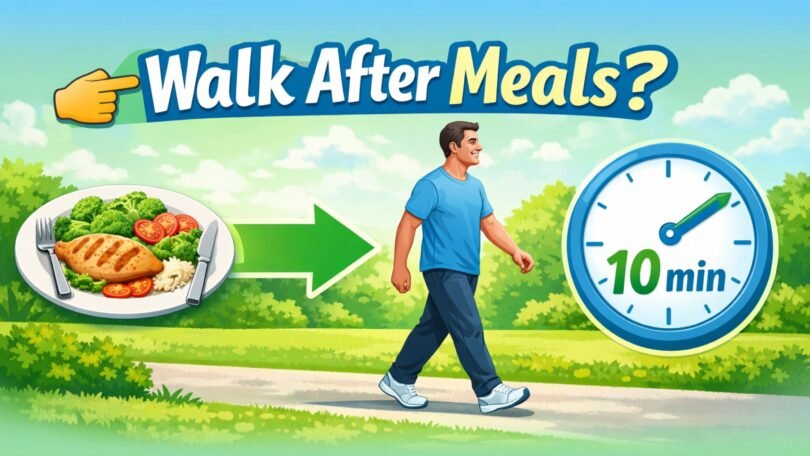

What if improving your health didn’t require a gym membership, expensive equipment, or an extra hour in your schedule?
What if it took just 10 minutes?
The after-meal reset walk is one of the simplest yet most overlooked habits for better digestion, stable blood sugar, improved metabolism, and long-term health. It’s not exercise in the traditional sense—it’s a metabolic reset your body quietly thanks you for.
Why the Body Struggles After Meals
After eating, your body shifts into digestion mode. Blood sugar rises, insulin is released, and nutrients begin moving into cells. When we immediately sit or lie down, this process becomes slower and less efficient.
Modern lifestyles encourage stillness after meals—working at desks, scrolling on phones, or lying down to “relax.” Over time, this pattern contributes to:
- Blood sugar spikes
- Fatigue and heaviness
- Bloating and poor digestion
- Gradual insulin resistance
The body isn’t designed to digest in complete stillness.
What Is an After-Meal Reset Walk?
An after-meal reset walk is a gentle 10-minute walk taken within 15–30 minutes after eating. It’s not fast, sweaty, or exhausting. The goal is movement, not intensity.
This short walk helps muscles absorb glucose directly from the bloodstream, reducing the burden on insulin and improving metabolic efficiency.
Think of it as helping your body “clear the traffic” after a meal.
Blood Sugar Control: The Biggest Benefit
One of the strongest benefits of walking after meals is improved blood sugar regulation.
When you walk:
- Muscle contractions use glucose for energy
- Blood sugar levels rise less sharply
- Insulin works more efficiently
Studies consistently show that even light walking after meals significantly reduces post-meal blood sugar spikes—especially beneficial for people with insulin resistance, prediabetes, or diabetes.
But even healthy individuals benefit from smoother glucose curves.
Digestion Improves When You Move
Gentle movement stimulates the digestive system.
A short walk:
- Encourages stomach emptying
- Reduces bloating and gas
- Helps prevent acid reflux
Walking signals the gut to work rhythmically, making digestion smoother and more comfortable. Many people notice less heaviness and better appetite regulation when they make this a daily habit.
Energy Increases Instead of Crashing
That post-meal sleepiness isn’t always about overeating—it’s often about poor glucose handling.
Sitting immediately after meals can cause blood sugar fluctuations that lead to fatigue. Walking helps stabilize energy, keeping you alert rather than sluggish.
This is especially useful after lunch, when many people struggle with focus and productivity.
Weight Management Without “Workout Stress”
The after-meal walk is not a fat-burning workout—and that’s exactly why it works.
It:
- Supports metabolic health without stressing the body
- Improves insulin sensitivity
- Reduces the chance of excess energy being stored as fat
Over time, this small habit can make weight management easier—without strict dieting or intense exercise routines.
Mental Health Benefits You Didn’t Expect
Walking after meals isn’t just physical—it’s mental.
Gentle movement:
- Reduces stress hormones
- Improves mood
- Enhances digestion-brain communication
This simple ritual can become a mindful pause in the day, helping regulate emotions and reduce stress-related eating.
How to Do the 10-Minute Reset Walk Correctly
This habit works best when it stays simple:
- Walk within 15–30 minutes after eating
- Keep the pace relaxed—you should be able to talk
- No phone scrolling if possible
- Indoors or outdoors both work
- Focus on consistency, not perfection
You don’t need special shoes or a specific location. Even pacing around your home counts.
Who Benefits the Most?
While everyone can benefit, this habit is especially powerful for:
- People with diabetes or prediabetes
- Desk workers and sedentary individuals
- Those experiencing bloating or indigestion
- Anyone struggling with post-meal fatigue
It’s a low-risk, high-reward habit suitable for all ages.
Why Small Habits Create Big Health Shifts
Health transformation doesn’t always come from dramatic changes. Often, it comes from small habits repeated daily.
The after-meal reset walk:
- Fits into real life
- Requires no equipment
- Works quietly but effectively
Ten minutes may seem insignificant—but when done consistently, it reshapes how your body handles food, energy, and metabolism.
FAQs
1. What is an after-meal reset walk?
It is a gentle 10-minute walk done within 15–30 minutes after eating to support digestion, blood sugar control, and overall metabolic health.
2. Do I need to walk fast for it to be effective?
No. A relaxed, comfortable pace is enough. The goal is light movement, not intense exercise.
3. Is walking after meals safe for everyone?
Yes, for most people. Those with medical conditions should adjust pace or consult a healthcare professional if needed.
4. How soon after eating should I start walking?
Ideally within 15–30 minutes after finishing your meal.
5. Can this habit help with blood sugar management?
Yes. Walking after meals helps muscles absorb glucose, reducing blood sugar spikes.
6. Will a 10-minute walk really make a difference?
Yes. Even short, consistent walks can improve digestion, energy levels, and metabolic health over time.
7. Can I do this walk indoors?
Absolutely. Walking around your home or office works just as well as walking outside.
8. Should I walk after every meal?
If possible, yes. Even doing it after one main meal daily provides benefits.
9. Does walking after meals help with weight management?
It supports weight control by improving insulin sensitivity and preventing excess energy storage.
10. What should I avoid during the after-meal walk?
Avoid lying down, intense exercise, or immediately sitting for long periods after eating.