
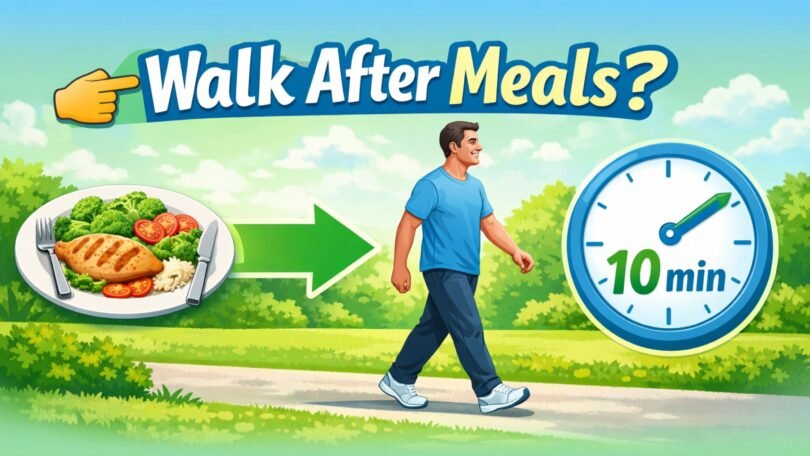

The power of the after-meal reset walk lies in its simplicity. Yet behind this small habit is a surprisingly complex and intelligent physiological response that modern lifestyles have slowly erased.
For most of human history, eating was naturally followed by movement—walking back to work, tending to daily tasks, or simple household activity. The idea of finishing a meal and immediately sitting for hours is a very recent phenomenon, and the human body has not adapted well to it.
The Science Behind Post-Meal Movement
When you eat, carbohydrates are broken down into glucose and released into the bloodstream. Insulin is then secreted to move this glucose into cells for energy or storage. When you remain sedentary after meals, insulin has to work harder to manage this process.
Walking activates skeletal muscles, which can absorb glucose independently of insulin. This reduces the strain on the pancreas and lowers circulating blood sugar levels more efficiently.
Over time, this leads to:
- Better insulin sensitivity
- Reduced risk of metabolic disorders
- Lower inflammatory burden
This makes the after-meal walk a preventive habit, not just a corrective one.
Why Sitting Is Worse Than You Think
Many people believe sitting is harmless as long as they exercise later. However, prolonged sitting—especially after meals—creates metabolic stagnation.
Post-meal sitting:
- Slows glucose clearance
- Promotes fat storage
- Reduces circulation
- Weakens digestion
Even regular gym-goers can experience poor metabolic health if most of their day is spent sitting. The after-meal walk acts as a counterbalance to prolonged inactivity.
A Tool for Digestive Comfort
Digestive complaints like bloating, acidity, and heaviness are often blamed on “bad food,” but posture and movement play a major role.
Gentle walking:
- Encourages gastric emptying
- Reduces pressure on the stomach
- Improves gut motility
This is why lying down after meals worsens reflux and bloating, while light movement relieves it.
Over time, people who adopt this habit often notice fewer digestive disturbances—even when eating the same foods.
Hormonal Harmony Through Movement
Blood sugar is not the only hormone influenced by post-meal walking.
This habit also positively affects:
- Cortisol (stress hormone)
- Ghrelin (hunger hormone)
- Leptin (satiety hormone)
By stabilizing these signals, walking after meals helps reduce emotional eating, late-night snacking, and erratic hunger patterns.
It gently teaches the body to trust its energy supply again.
Mental Clarity and Mood Regulation
One underrated benefit of the after-meal walk is its effect on the brain.
Post-meal sluggishness often reduces focus, memory, and productivity. Light walking increases blood flow to the brain, improving alertness without overstimulation.
Many people report:
- Better focus after lunch
- Reduced irritability
- Improved mood
This makes it an excellent habit for students, professionals, and anyone experiencing mental fatigue.
Weight Management: The Indirect Advantage
The after-meal walk does not “burn” a large number of calories, but it influences where calories go.
By improving insulin efficiency, it:
- Reduces fat storage
- Encourages energy use
- Preserves lean muscle
This is why people who walk after meals often notice gradual body composition improvements—even without dietary restriction.
It’s metabolic efficiency, not calorie obsession.
Why Consistency Matters More Than Intensity
Many people abandon health habits because they are too demanding. The after-meal walk succeeds because it is easy to sustain.
You don’t need:
- Special clothing
- Extra time slots
- High motivation
You simply attach it to something you already do—eating.
Consistency rewires metabolic pathways, making the body more adaptable and resilient over time.
Adapting the Habit to Real Life
This habit is flexible and forgiving.
- At home: walk around the house
- At work: walk down corridors or stairs
- Outdoors: a calm stroll, not power walking
- With family: conversation walk
Even imperfect execution is effective.
The goal is movement—not perfection.
Common Myths Around Walking After Meals
“It will cause indigestion.”
False. Gentle walking improves digestion. Only intense exercise should be avoided immediately after meals.
“It’s only for diabetics.”
No. It benefits everyone by preventing blood sugar dysregulation before it starts.
“I already exercise, so I don’t need this.”
Exercise and post-meal movement serve different metabolic purposes. Both are important.
Who Should Be Extra Mindful?
The after-meal reset walk is especially beneficial for:
- People with diabetes or prediabetes
- Those with sedentary jobs
- Older adults
- Individuals with digestive discomfort
- Anyone experiencing post-meal fatigue
For pregnant women or people with joint issues, the pace can be modified.
Building It Into a Habit
To make this habit stick:
- Start with one meal a day
- Set a gentle reminder
- Keep it enjoyable, not forced
- Pair it with something pleasant—music or conversation
The body adapts quickly when consistency is respected.
The Bigger Picture of Preventive Health
The after-meal reset walk is a reminder that health does not always require dramatic interventions.
Sometimes, the most powerful strategies are:
- Simple
- Sustainable
- Science-backed
This habit supports metabolic health, digestive efficiency, mental clarity, and long-term disease prevention—without stress.
Conclusion
The after-meal reset walk is proof that better health doesn’t always demand bigger efforts—sometimes it asks for better timing. In just 10 gentle minutes, this simple habit supports blood sugar balance, improves digestion, boosts energy, and protects long-term metabolic health.
In a lifestyle dominated by sitting and screens, choosing to move after meals reconnects the body with a natural rhythm it was designed to follow. It reduces the burden on insulin, prevents energy crashes, and turns everyday meals into opportunities for healing rather than stress.
Consistency matters more than intensity. You don’t need perfection, speed, or special equipment—only the intention to move. Over time, this small daily choice compounds into stronger digestion, steadier energy, and better overall health.
Sometimes, the most powerful health reset isn’t found in a diet plan or workout schedule—but in taking a simple walk at the right moment.
FAQs
1. What exactly is an after-meal reset walk?
It’s a gentle 10-minute walk done shortly after eating to help digestion and stabilize blood sugar levels.
2. How soon after eating should I walk?
Ideally within 15–30 minutes after finishing a meal.
3. Do I need to walk fast to get benefits?
No. A relaxed, comfortable pace is enough to activate metabolic benefits.
4. Can I sit for a few minutes before walking?
Yes. Short rest is fine, but avoid lying down or sitting for long periods immediately after meals.
5. Is this habit helpful for people without diabetes?
Yes. It helps prevent blood sugar fluctuations and supports overall metabolic health for everyone.
6. Can walking after meals help with bloating?
Yes. Gentle movement improves gut motility and often reduces bloating and discomfort.
7. Should I do this after every meal?
If possible, yes. Even doing it after one main meal daily can make a noticeable difference.
8. Can I walk indoors if I don’t have space outside?
Absolutely. Walking inside your home or office works just as effectively.
9. Will this replace regular exercise?
No. It complements exercise but does not replace strength training or structured workouts.
10. How long does it take to see benefits?
Many people notice improved digestion and energy within 1–2 weeks of consistent practice.