
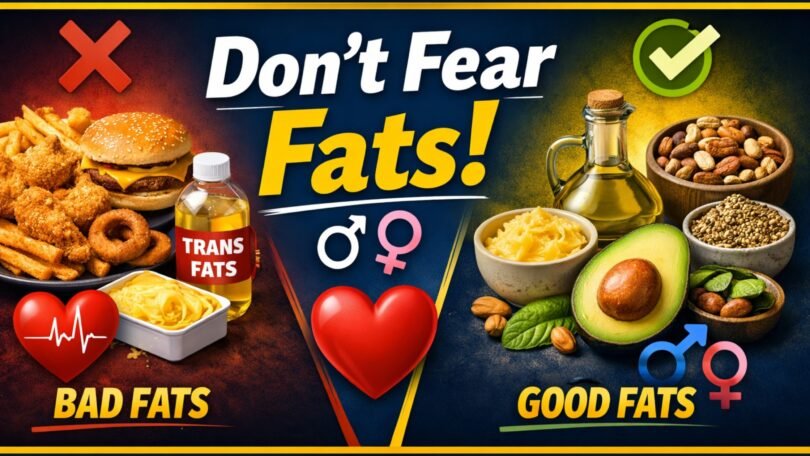

For years, fats have been misunderstood, feared, and often eliminated from diets in the name of “healthy eating.” Low-fat labels became popular, and people started believing that eating fat would directly lead to weight gain, heart disease, and hormonal imbalance.
But science now tells a very different story.
The truth is simple: your body needs fats to survive, heal, and function optimally. The key lies in choosing the right fats—and using them the right way.
Why Fats Are Not the Enemy
Fats are one of the three essential macronutrients, alongside carbohydrates and proteins. Unlike quick energy sources, fats provide long-lasting fuel, structural support to cells, and play a major role in internal regulation.
Without adequate healthy fats:
- Hormone production slows down
- Nutrient absorption drops
- Brain and heart health suffer
In short, fats don’t harm your body—wrong fats do.
Fats and Heart Health: The Real Connection
For decades, saturated fat was blamed for heart disease. However, recent research highlights that chronic inflammation, excess sugar, and trans fats are bigger contributors to cardiovascular problems than natural fats.
How Good Fats Protect the Heart
Healthy fats:
- Improve good cholesterol (HDL)
- Reduce inflammation in blood vessels
- Support flexible, healthy arteries
- Lower triglyceride levels when replacing refined carbs
Omega-3 fatty acids, in particular, are known to reduce the risk of heart attacks and irregular heart rhythms.
Hormones Are Made of Fat – Literally
Hormones are chemical messengers that control metabolism, mood, reproduction, sleep, and stress response. What many people don’t realize is that most hormones are synthesized from fats and cholesterol.
Low-fat diets over a long period can lead to:
- Irregular menstrual cycles
- PCOS symptoms worsening
- Low testosterone in men
- Thyroid imbalances
- Mood swings and anxiety
Healthy fats help stabilize hormones by:
- Supporting estrogen and progesterone balance
- Improving insulin sensitivity
- Reducing cortisol (stress hormone) spikes
Understanding the Different Types of Fats
Not all fats are created equal. Let’s break them down clearly.
1. Unsaturated Fats – The Protective Fats
These are considered the healthiest fats and should form the majority of fat intake.
Sources include:
- Nuts and seeds
- Olive oil, mustard oil
- Avocados
- Fatty fish like salmon, sardines, mackerel
Benefits:
- Heart protection
- Hormone balance
- Anti-inflammatory effects
2. Saturated Fats – Not as Bad as You Think
Saturated fats have been unfairly demonized. When consumed in moderation and from natural sources, they can be part of a healthy diet.
Natural sources:
- Ghee
- Butter (in limited amounts)
- Coconut and coconut oil
- Full-fat dairy (curd, paneer)
Role in the body:
- Supports hormone production
- Provides stable energy
- Helps absorb fat-soluble vitamins
The problem arises when saturated fats are combined with excess sugar and ultra-processed foods.
3. Trans Fats – The Real Villains
These fats offer no health benefit and should be avoided as much as possible.
Common sources:
- Bakery items
- Packaged snacks
- Margarine
- Deep-fried fast foods
Why they are harmful:
- Increase bad cholesterol (LDL)
- Lower good cholesterol (HDL)
- Trigger inflammation
- Increase risk of heart disease and insulin resistance
How Much Fat Do You Actually Need?
Fats should ideally make up 20–30% of your daily calorie intake, depending on age, lifestyle, and health conditions.
Instead of counting grams obsessively, focus on:
- Cooking with the right oils
- Including nuts/seeds daily
- Avoiding packaged and fried foods
Balance matters more than restriction.
Cooking Oils: Choose Wisely
Not all oils are suitable for all cooking methods.
- For Indian cooking: mustard oil, groundnut oil
- For low-heat cooking & salads: olive oil
- For traditional meals: ghee in moderation
Avoid reheating oils multiple times, as this damages their structure and increases inflammation.
Signs You May Be Lacking Healthy Fats
Your body often gives subtle signals when fat intake is inadequate:
- Dry skin and hair
- Constant hunger
- Fatigue and brain fog
- Irregular periods
- Mood swings
Adding the right fats often improves these symptoms naturally.
Conclusion
Fats are not something to fear—they are something to understand.
Choosing the right fats can:
- Protect your heart
- Balance your hormones
- Improve energy and mental clarity
- Support long-term health
Instead of eliminating fats, upgrade them. Your heart, hormones, and overall well-being depend on it.
FAQs
1. Are fats really necessary for good health?
Yes. Fats are essential for energy, hormone production, brain function, and absorption of fat-soluble vitamins like A, D, E, and K.
2. Do healthy fats cause weight gain?
Healthy fats do not cause weight gain when consumed in moderation. In fact, they improve satiety and help control overeating.
3. Which fats are best for heart health?
Unsaturated fats, especially omega-3 fatty acids from nuts, seeds, fish, and olive oil, are best for protecting heart health.
4. Are saturated fats harmful to hormones?
Natural saturated fats in moderate amounts actually support hormone production. Problems arise when they are overconsumed or combined with processed foods.
5. Why are trans fats considered dangerous?
Trans fats increase inflammation, raise bad cholesterol (LDL), lower good cholesterol (HDL), and significantly increase heart disease risk.
6. How do fats influence hormonal balance?
Fats provide the building blocks for hormones like estrogen, progesterone, and testosterone, helping maintain metabolic and reproductive health.
7. Can a low-fat diet affect menstrual health?
Yes. Long-term low-fat diets can lead to irregular periods, hormonal imbalances, and reduced fertility in women.
8. Which cooking oils are safest for daily use?
Mustard oil, groundnut oil, ghee (in moderation), and olive oil for low-heat cooking are good options for daily use.
9. How much fat should be included in a balanced diet?
Around 20–30% of daily calorie intake should come from healthy fats, adjusted according to lifestyle and health needs.
10. What are common signs of fat deficiency?
Dry skin, fatigue, constant hunger, mood swings, hormonal imbalance, and poor concentration can indicate insufficient healthy fat intake.