

“I’m not hungry in the morning.”
“I don’t have time.”
“I’ll just grab coffee.”
Skipping breakfast has slowly become normal — even fashionable. In busy households, rushed mornings, school drop-offs, early meetings, and late-night schedules, breakfast is often the first thing to disappear.
It feels like a small habit. Harmless. Convenient.
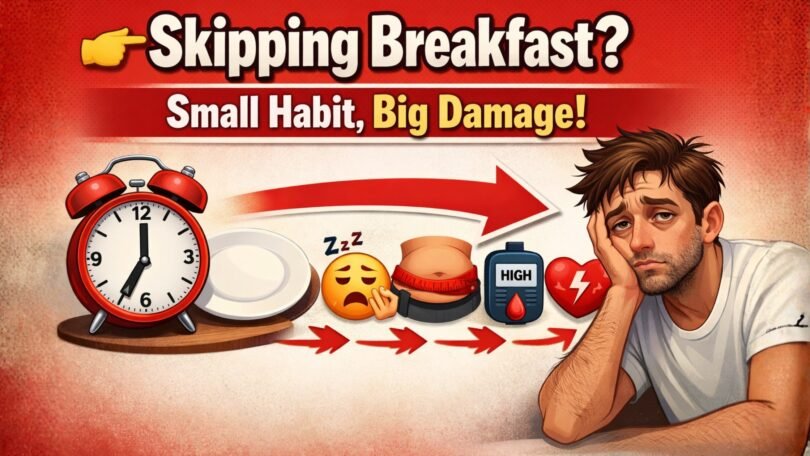
But over time, this small habit can quietly influence metabolism, hormones, energy levels, and even long-term disease risk.
Breakfast isn’t just the first meal of the day.
It’s the first message you send to your body.
🌅 What Happens When You Skip Breakfast?
After 8–10 hours of sleep, your body wakes up in a fasting state. Blood sugar is low. Energy stores are partially used. Hormones like cortisol are naturally higher in the morning to help you wake up.
When you eat breakfast, you:
- Replenish glucose for brain function
- Signal your metabolism to start working efficiently
- Stabilize hunger hormones
- Reduce mid-morning cravings
When you skip it regularly, your body adapts — but not always in a healthy way.
⚖️ Blood Sugar Imbalance
Skipping breakfast can cause blood sugar to remain unstable. Many people experience:
- Mid-morning fatigue
- Irritability
- Difficulty concentrating
- Strong cravings for sugar or refined carbohydrates later in the day
By lunchtime, hunger is often extreme. This increases the chances of overeating or choosing high-calorie, quick-fix foods.
Over months and years, repeated blood sugar spikes and crashes may increase the risk of insulin resistance— a key factor in type 2 diabetes.
🔥 Metabolism Slows Down
Your metabolism works best with regular nourishment.
When breakfast is skipped frequently, the body may shift into a mild “energy conservation mode.” This doesn’t mean immediate weight gain — but over time, it may:
- Reduce calorie efficiency
- Increase fat storage
- Disrupt hunger signals
Ironically, people who skip breakfast to lose weight often struggle with evening overeating.
🧠 Brain Performance & Mood
The brain relies heavily on glucose.
Children and adults who skip breakfast may experience:
- Reduced focus
- Poor academic or work performance
- Mood swings
- Increased stress response
For growing children especially, breakfast supports learning, memory, and stable energy throughout the school day.
💓 Long-Term Health Risks
Research consistently shows associations between regular breakfast skipping and higher risk of:
- Obesity
- Type 2 diabetes
- Heart disease
- High blood pressure
- Metabolic syndrome
Skipping breakfast occasionally isn’t harmful.
But turning it into a long-term habit may gradually disturb metabolic balance.
🍽️ It’s Not Just About Eating — It’s About What You Eat
A sugary pastry and coffee technically count as breakfast — but they won’t provide lasting stability.
An effective breakfast should include:
- Protein (eggs, curd, nuts, paneer, dal)
- Fiber (fruits, whole grains, oats)
- Healthy fats (nuts, seeds)
This combination:
- Keeps you full longer
- Prevents energy crashes
- Supports hormonal balance
⏳ “But I’m Not Hungry in the Morning”
Often, low morning appetite is a sign of:
- Late-night eating
- Poor sleep
- High stress
- Irregular meal timing
Adjusting dinner timing and sleep can naturally restore morning hunger signals.
Start small:
- A banana with nuts
- A glass of milk and soaked almonds
- A boiled egg and fruit
You don’t need a heavy meal.
You need consistency.
👨👩👧👦 Why This Habit Starts Early
Many adults who skip breakfast developed the habit in childhood.
Children who regularly miss breakfast may:
- Experience reduced concentration
- Snack excessively later
- Develop irregular hunger patterns
Early routines shape lifelong metabolic patterns.
💛 The Bigger Picture
Skipping breakfast once in a while isn’t dangerous.
But when it becomes daily, it sends a subtle message to the body:
“Food is unpredictable.”
Over time, this unpredictability affects:
- Hormones
- Cravings
- Energy
- Fat storage
- Long-term disease risk
A simple morning meal creates stability.
And stability builds health.
🌿 Final Thought
Breakfast doesn’t need to be elaborate.
It doesn’t need to be trendy.
It needs to be regular, balanced, and intentional.
Sometimes the smallest habits — like eating within an hour of waking — create the biggest long-term impact.
Your body works for you all day.
Starting your morning with nourishment is a small way of working for it too.
FAQs
1. Is skipping breakfast harmful for everyone?
Not necessarily. Occasional skipping is fine, but regularly missing breakfast may affect metabolism, blood sugar balance, and long-term health.
2. Does skipping breakfast cause weight gain?
It can indirectly contribute to weight gain by increasing hunger later in the day, leading to overeating or unhealthy food choices.
3. How does skipping breakfast affect blood sugar levels?
Skipping breakfast may cause blood sugar fluctuations, leading to fatigue, cravings, and increased risk of insulin resistance over time.
4. Is coffee enough for breakfast?
No. Coffee alone does not provide essential nutrients like protein, fiber, or healthy fats needed for stable energy and metabolism.
5. Can skipping breakfast slow metabolism?
Frequent breakfast skipping may disrupt hunger hormones and metabolic regulation, especially when followed by irregular eating patterns.
6. Is breakfast more important for children than adults?
Yes. Children need steady energy for growth, brain development, and concentration, making breakfast especially important.
7. What is a healthy breakfast option?
A balanced breakfast includes protein (eggs, curd, nuts), fiber (fruits, oats), and healthy fats (seeds, nuts).
8. Why am I not hungry in the morning?
Late-night eating, poor sleep, stress, or irregular meal timing can reduce morning appetite.
9. Can skipping breakfast increase the risk of diabetes?
Long-term breakfast skipping has been associated with higher risk of insulin resistance and type 2 diabetes.
10. What is the best time to eat breakfast?
Ideally within 1–2 hours of waking up to support metabolism and stabilize energy levels.