
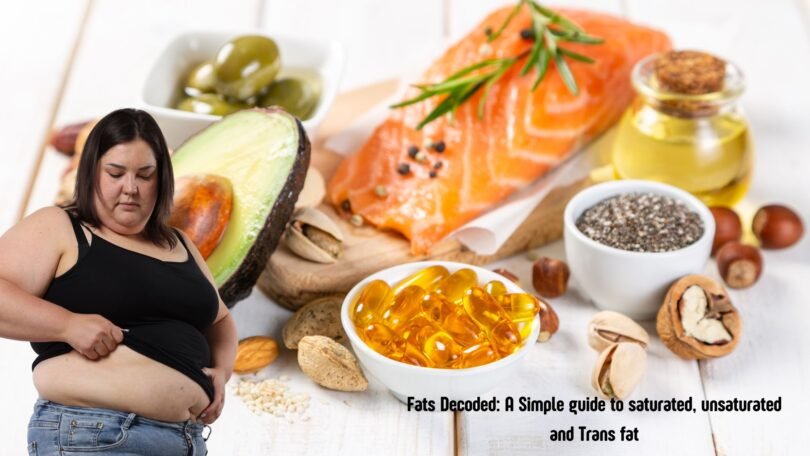

For years, fat has carried a bad reputation. Many people still believe that eating fat directly leads to weight gain, heart disease, or high cholesterol. As a result, fat-free and low-fat foods became popular, while natural fat-rich foods were pushed aside.
But the truth is simple: your body needs fat. What matters is the type of fat you choose and how often you consume it.
Let’s decode fats in a clear, practical way—without fear, confusion, or complicated science.
Why Our Body Needs Fat?
Fat is not just a source of calories. It plays several vital roles in the body:
- Provides long-lasting energy
- Supports brain and nerve function
- Helps absorb fat-soluble vitamins (A, D, E, K)
- Maintains hormone balance
- Keeps skin and joints healthy
Removing fat completely from the diet can actually harm metabolism and overall health.
The Three Main Types of Dietary Fat
Not all fats behave the same way inside the body. Understanding the difference helps you make smarter food choices.
1. Saturated Fat: Not the Villain It Was Made Out to Be

Saturated fats are usually solid at room temperature. They are commonly found in:
- Ghee and butter
- Coconut and coconut oil
- Full-fat dairy
- Red meat
For years, saturated fat was blamed for heart disease. Current research shows that moderate intake within a balanced diet is not harmful for most healthy individuals.
The real issue arises when saturated fats are consumed in excess or paired with:
- Refined carbohydrates
- Sugary foods
- Sedentary lifestyle
Saturated fats can be part of a healthy diet when eaten mindfully.
2. Unsaturated Fat: The Heart-Friendly Choice

Unsaturated fats are generally liquid at room temperature and are considered beneficial when used regularly.
Common sources include:
- Nuts and seeds
- Olive oil and mustard oil
- Avocados
- Fatty fish like salmon
Benefits of unsaturated fats:
- Support heart health
- Improve cholesterol balance
- Reduce inflammation
- Enhance metabolic function
Replacing refined oils and trans fats with unsaturated fats improves long-term health.
3. Trans Fat: The Fat That Truly Deserves Caution

Trans fats are industrially processed fats created to increase shelf life and flavor. They are commonly found in:
- Bakery products
- Fried fast food
- Packaged snacks
- Margarine and shortenings
Unlike other fats, trans fats provide no health benefits. They are strongly linked to:
- Heart disease
- Increased inflammation
- Insulin resistance
- Poor cholesterol levels
There is no safe level of trans fat intake. Avoiding them as much as possible is essential.
Fat and Weight Gain: What’s the Real Connection?
Fat does not automatically cause weight gain. Weight gain occurs when:
- Total calorie intake is consistently high
- Meals lack balance
- Physical activity is low
In fact, including healthy fats in meals:
- Improves satiety
- Reduces overeating
- Stabilizes blood sugar
Cutting fat completely often leads to increased sugar and refined carb intake, which worsens weight management.
Cooking Oils: Choosing Wisely Matters

Not all oils respond well to high heat. Overheating oils can create harmful compounds.
Practical tips:
- Use ghee or coconut oil for high-heat cooking
- Use olive, mustard, or groundnut oil for low-to-medium heat
- Avoid reusing oil multiple times
- Rotate oils instead of sticking to one type
How Much Fat Do We Really Need?
There is no one-size-fits-all number. Fat needs depend on:
- Age
- Activity level
- Health status
Instead of counting grams, focus on:
- Food quality
- Variety
- Portion awareness
A balanced plate naturally regulates fat intake.
Common Fat Myths That Need to Go?
- Eating fat does not directly make you fat
- Fat-free does not mean healthy
- Natural fats are not the same as processed fats
- Cutting fat can slow metabolism
Understanding these myths helps build a healthier relationship with food.
The Smart Way to Include Fats Daily
- Include nuts or seeds in snacks
- Add a spoon of healthy oil to meals
- Choose whole foods over packaged foods
- Avoid frequent fried and bakery items
Consistency matters more than perfection.
Conclusion
Fat is not the enemy. Misinformation is.
When chosen wisely, fats support metabolism, heart health, hormones, and overall well-being. Instead of fearing fat, learn to respect it, balance it, and use it to your advantage.
A healthy diet isn’t fat-free—it’s fat-smart.
FAQs
1. Are all fats bad for health?
No. Fats are essential for energy, hormone production, brain health, and vitamin absorption. The type and quantity of fat matter more than fat itself.
2. Is saturated fat harmful for everyone?
Not necessarily. In moderation and as part of a balanced diet, saturated fats are generally safe for healthy individuals.
3. What are the healthiest fats to eat daily?
Unsaturated fats from nuts, seeds, avocados, fish, and plant oils are considered the healthiest for regular consumption.
4. Why are trans fats considered dangerous?
Trans fats increase bad cholesterol, reduce good cholesterol, and raise the risk of heart disease and metabolic disorders.
5. Do fats cause weight gain?
Fats alone do not cause weight gain. Weight gain happens when total calorie intake is consistently higher than energy expenditure.
6. Is ghee better than refined oils?
Ghee can be a healthy option when used in small amounts, especially for cooking at high temperatures.
7. Should people with heart issues avoid fats completely?
No. They should focus on reducing trans fats and excess saturated fats while including heart-friendly unsaturated fats.
8. How can I avoid trans fats in daily meals?
Limit packaged foods, avoid fried fast food, and read ingredient labels for words like “hydrogenated oils.”
9. Are fat-free or low-fat foods healthier?
Not always. Many low-fat foods contain added sugars or starches that may negatively affect blood sugar and appetite.
10. What is the best way to include fats in a balanced diet?
Choose natural fat sources, rotate cooking oils, control portions, and pair fats with whole foods.