
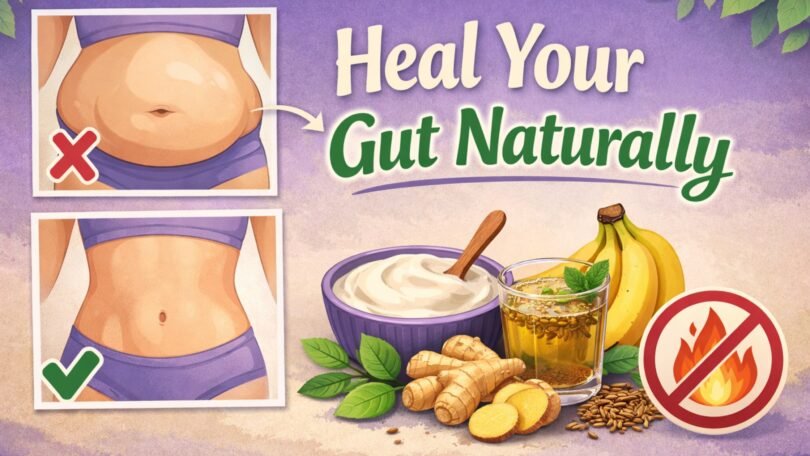

Bloating. Heaviness. That uncomfortable tight feeling after meals.
Almost everyone experiences it at some point — but when it becomes frequent, it’s your gut’s way of saying, “Something isn’t working well.”
Gut inflammation and bloating are not random problems. They are signals. Signals that digestion may be stressed, the gut lining irritated, or the balance of good bacteria disturbed.
The good news?
Your gut heals the same way it gets irritated — through what you eat every day.
🌿Why Does Gut Inflammation Happen?
Inflammation in the gut can develop due to:
- Excess processed and fried foods
- High sugar intake
- Irregular meal timing
- Overeating
- Frequent antibiotics
- Stress and poor sleep
- Low fiber intake
When the gut lining becomes irritated, digestion slows down. Gas builds up. Nutrients aren’t absorbed properly. And you’re left feeling uncomfortable, sluggish, and sometimes even moody.
Healing starts with calming the gut — not overloading it.
🌱 Foods That Calm Gut Inflammation
1. Curd (Yogurt) and Fermented Foods
Curd contains beneficial bacteria that help restore gut balance. A healthy gut microbiome reduces inflammation and improves digestion.
Simple addition:
Have a small bowl of curd with lunch daily.
2. Cooked Vegetables (Not Raw Overload)
While raw salads are healthy, too much raw fiber can worsen bloating in sensitive individuals.
Better options:
- Lightly steamed vegetables
- Bottle gourd
- Pumpkin
- Carrots
- Spinach (well cooked)
Cooking breaks down fiber, making it easier to digest.
3. Ginger
Ginger naturally reduces inflammation and improves gastric emptying, preventing food from sitting too long in the stomach.
Try:
- Warm ginger water
- Adding grated ginger to meals
4. Fennel Seeds (Saunf)
Fennel relaxes intestinal muscles and reduces gas formation.
After meals:
Chew a small pinch of fennel seeds for natural relief.
5. Bananas
Bananas are gentle on the gut and help regulate bowel movements. They also contain prebiotic fibers that feed good bacteria.
Best for:
Morning or mid-meal snack.
6. Oats
Oats provide soluble fiber, which supports gut bacteria and improves digestion without irritating the lining.
Choose:
Plain oats instead of flavored sugary packets.
7. Bone Broth or Light Soups
Warm broths and soups soothe the gut lining and are easy to digest, especially during recovery from digestive discomfort.
8. Papaya
Papaya contains natural digestive enzymes that help break down proteins and reduce bloating.
Best consumed:
On an empty stomach or mid-morning.
9. Chia Seeds (Soaked)
Soaked chia seeds form a gel-like texture that supports bowel regularity and reduces inflammation.
Important:
Always soak before consuming.
10. Turmeric
Turmeric contains curcumin, known for its anti-inflammatory properties.
Use in:
Curries, warm milk, or soups.
🚫 Foods That May Worsen Bloating
While adding healing foods, also reduce:
- Carbonated drinks
- Packaged snacks
- Refined sugar
- Excess dairy (if lactose sensitive)
- Very oily and fried foods
- Eating too fast
Sometimes it’s not just what you eat — it’s how you eat.
🧘♀️ Lifestyle Matters Too
Gut health is not only about food. Consider:
- Eating slowly
- Chewing properly
- Regular meal timing
- Managing stress
- Sleeping 7–8 hours
- Light physical activity daily
The gut and brain are deeply connected. Stress alone can trigger bloating.
💛 A Gentle Reminder (Conclusion)
Gut healing is not instant. It requires consistency.
You don’t need a complicated detox.
You need steady nourishment.
Small changes — like adding curd daily, replacing processed snacks with fruits, and chewing food slowly — can make a visible difference within weeks.
Listen to your body.
It always tells you what it needs.
Your gut doesn’t ask for perfection.
It asks for balance.
FAQs
1. What causes frequent bloating?
Frequent bloating can be caused by poor digestion, excess processed foods, eating too fast, stress, low fiber intake, or imbalance of gut bacteria.
2. Is bloating always related to food?
Not always. Stress, hormonal changes, lack of sleep, and certain medical conditions can also contribute to bloating.
3. Which foods are best for calming gut inflammation?
Curd, cooked vegetables, ginger, fennel seeds, oats, bananas, papaya, turmeric, and light soups are gentle and gut-friendly.
4. Are raw salads bad for bloating?
Not necessarily, but excessive raw vegetables can worsen bloating in people with sensitive digestion. Lightly cooked vegetables are often easier to tolerate.
5. How does gut health affect overall health?
A healthy gut supports immunity, nutrient absorption, mood balance, and metabolism. Poor gut health can lead to fatigue and frequent discomfort.
6. Can probiotics help reduce bloating?
Yes. Natural probiotics like curd and fermented foods help restore healthy gut bacteria and reduce inflammation.
7. How long does it take to improve gut inflammation through diet?
With consistent dietary changes, many people notice improvement within 2–4 weeks.
8. Should I completely avoid dairy if I feel bloated?
Only if you are lactose intolerant or sensitive. Otherwise, fermented dairy like curd is usually well tolerated.
9. Does drinking water reduce bloating?
Yes. Adequate hydration supports digestion and prevents constipation, which can reduce bloating.
10. When should I consult a doctor for bloating?
If bloating is severe, persistent, painful, or associated with weight loss or other symptoms, medical advice is recommended.