
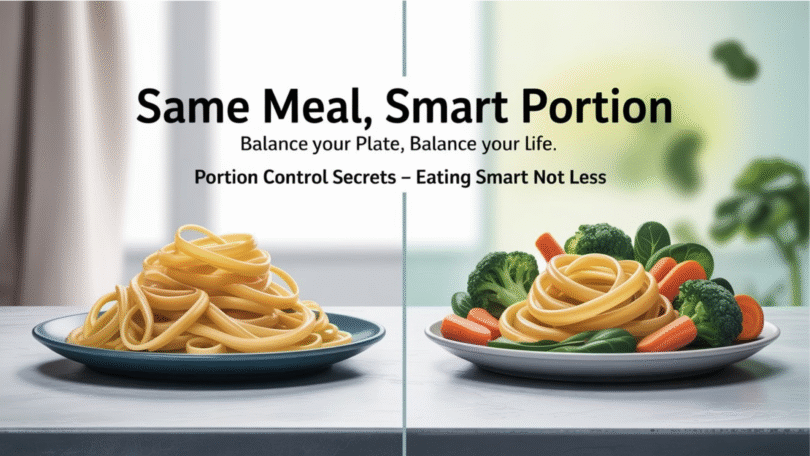

Picture this: you walk into a fast-food outlet and order a “regular” soda. Thirty years ago, that regular size was about 200 ml. Today, a “regular” is closer to 600 ml—three times larger, but our bodies didn’t suddenly evolve to need three times more sugar. This is the silent reality of portion distortion, where larger servings have quietly become the new normal.
The result? Rising obesity, diabetes, and lifestyle diseases. But here’s the hopeful part: research shows that controlling portion sizes can be more effective than following restrictive diets. It doesn’t force you to cut out entire food groups, nor does it make you feel deprived. Instead, portion control teaches you how to enjoy every food—yes, even pizza and cake—without harming your health.
This article reveals the secrets of portion control, why it works better than “eating less,” and how you can apply it in everyday life. By the end, you’ll know how to transform your eating habits sustainably and deliciously.
What Is Portion Control, Really?
At its core, portion control is about eating the right amount of food for your body’s needs. Not too much, not too little.
- Serving size vs. Portion size: Serving size is a fixed measurement (like ½ cup rice), often written on food labels. Portion size is how much you actually serve yourself—which could be ½ cup or 2 cups.
- Why it matters: Over time, unconsciously choosing larger portions leads to calorie creep, weight gain, and sluggishness—even if you’re eating “healthy” foods.
- Example: A handful of almonds (about 10–12 nuts) is an ideal snack, but finishing a 200g pack in one go could give you 1,200 calories, nearly half of your daily needs. Same food, very different outcome.
Why Eating Less Isn’t Always Healthy
Many people mistake portion control for restriction. They think: “If I want to lose weight, I just need to eat less.” But this approach backfires for several reasons:
- Metabolism slowdown: When you cut calories too drastically, your body switches to “survival mode,” slowing down metabolism and making it harder to lose weight.
- Nutrient deficiencies: Eating too little means you risk missing essential vitamins, minerals, and proteins.
- Cravings and bingeing: Restrictive eating often leads to rebound overeating. That’s why crash diets rarely last.
- Loss of energy and focus: Food is fuel. Skipping meals or eating too little can leave you irritable, tired, and unable to concentrate.
👉 Portion control is smarter. It’s about balance, not starvation. You eat enough to feel satisfied while maintaining steady energy levels.
The Psychology and Science Behind Portion Control
Humans are not just biological eaters—we’re psychological eaters. Our environment, culture, and emotions often dictate how much we consume.
- Plate Size Effect: Our brains misjudge quantity based on visual cues.
- Mindless Eating: Eating while watching TV or scrolling your phone can make you consume 25% more, because your brain doesn’t register fullness.
- Emotional Eating: Stress, sadness, or boredom often trigger eating, even when we’re not physically hungry.
- Cultural Habits: In many cultures, cleaning your plate is considered polite, which leads to eating beyond satiety.
Understanding these cues is the first step toward reclaiming control. Portion control is as much about awareness as it is about measurement.
Portion Control Secrets: Eating Smart, Not Less
1. The Plate Method – A Simple Visual Formula for Balanced Eating
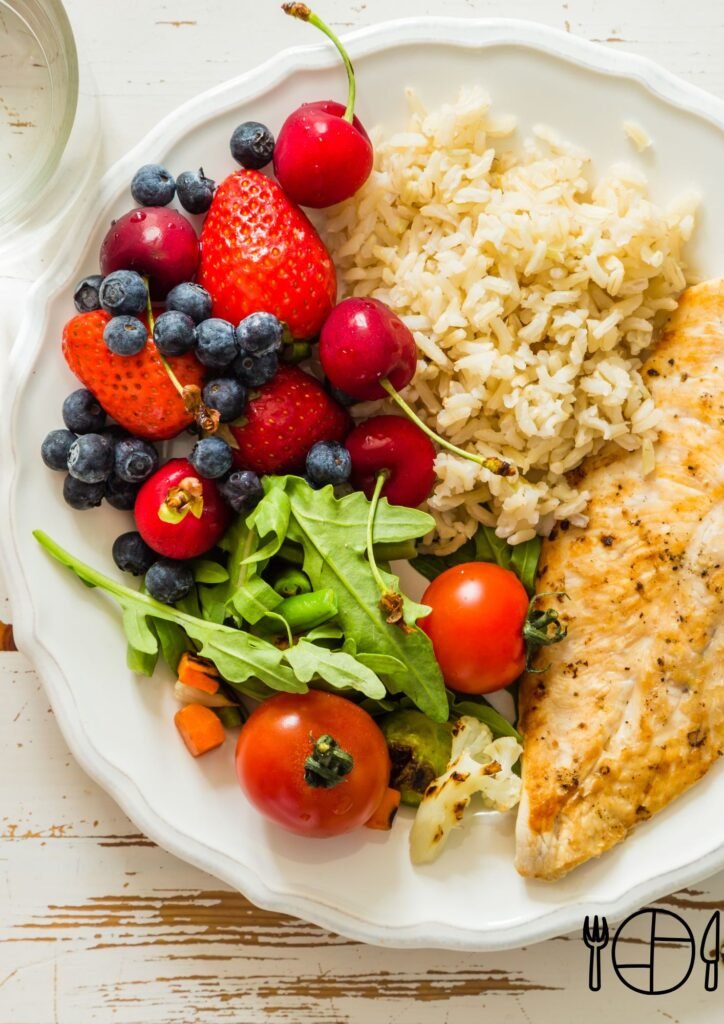
The Plate Method is one of the simplest and most effective tools for portion control. Instead of counting calories or weighing food, you simply divide your plate into sections: half vegetables, one-quarter protein, one-quarter grains or carbs.
Why it works: Filling half the plate with vegetables ensures bulk without excess calories. The protein keeps you satisfied longer, while the smaller carb section provides energy without spiking blood sugar. It’s an automatic way of balancing nutrition and avoiding overloading on one food group.
Example: Think of a home-cooked Indian meal. A typical plate might have two chapatis, rice, dal, sabzi, and maybe some pickle. By following the Plate Method, you’d reduce the rice to a smaller portion, stick with one or two chapatis, and fill half the plate with a mix of cooked and raw vegetables. This small change prevents overeating carbs while still enjoying the traditional meal.
Practical Tip: When eating out at buffets or weddings, mentally divide your plate into this ratio before serving. If you start with salad or veggies first, the rest of the food will naturally take up less space, keeping portions balanced.
2. The Hand Guide – Portion Control That Travels With You
Carrying measuring cups or weighing scales everywhere is unrealistic, especially in Indian households or during social events. That’s where your hands become your best tool. Since your hand size is proportional to your body, it’s a natural portion control guide:
- Protein: Palm size (about 3–4 oz chicken, paneer, fish, or beans).
- Carbs: One cupped hand (rice, pasta, poha, or upma).
- Fats: Thumb size (ghee, butter, cheese, nuts).
- Veggies: Two hands cupped together.
Why it works: It’s practical, quick, and works everywhere—whether at a family wedding, office canteen, or street food stall.
Example: Imagine standing at a dosa stall. Instead of overloading with three dosas because they look tempting, you can check your portion using the hand guide—one dosa roughly matches the size of your two hands, making it a reasonable portion. The chutneys and sambar can be limited to palm-sized servings.
Practical Tip: Teach kids this trick early. They learn to judge their food portions naturally without feeling restricted.
3. Mindful Eating – Turning Every Bite into Awareness
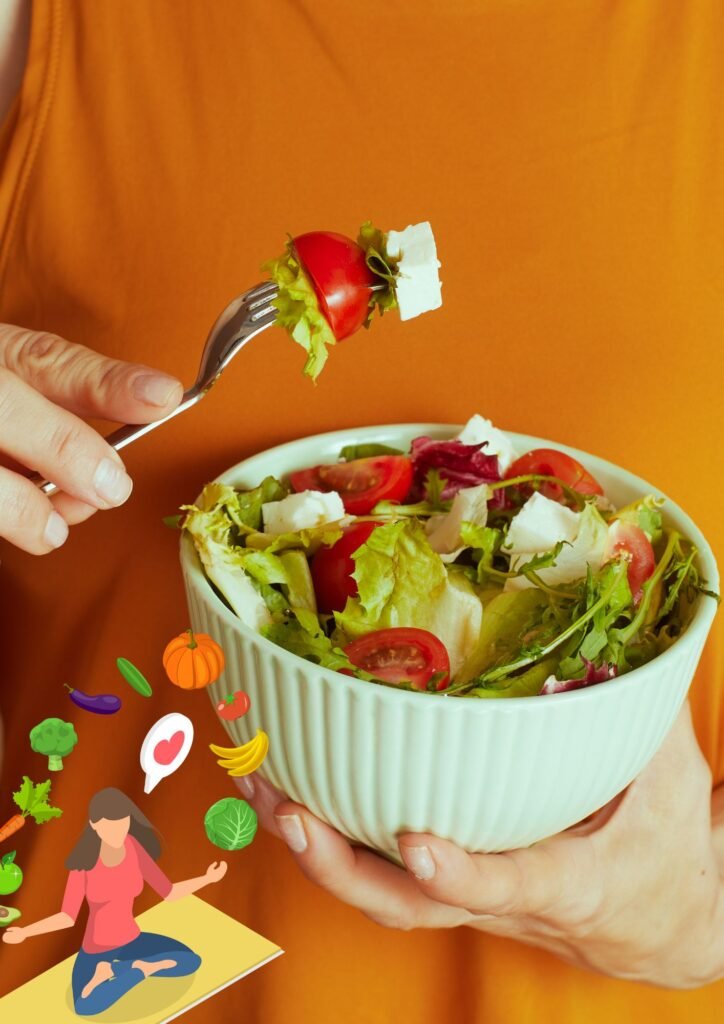
Mindful eating is about slowing down and engaging your senses—sight, smell, taste, and texture—while eating. It’s the opposite of gulping food while scrolling Instagram or binge-watching TV. Research shows distracted eaters consume up to 25% more calories because the brain fails to register fullness.
Why it works: Eating slowly gives the stomach time to send “I’m full” signals to the brain (around 20 minutes). When you eat mindfully, you enjoy food more, stop earlier, and reduce overeating.
Example: At many Indian homes, meals are shared with family. Traditionally, people sat cross-legged on the floor, eating slowly without distractions. Compare this with today’s hurried office lunches eaten in front of a laptop. The old way promoted mindfulness; the modern way encourages mindless eating.
Practical Tip: Try the 20-bite rule: chew every bite at least 20 times before swallowing. Not only will you eat less, but digestion also improves dramatically.
4. Downsizing Without Feeling Deprived

Nobody likes the word diet because it screams restriction. Portion control, on the other hand, is more about creating smart illusions and using psychology to feel satisfied with less. The trick is to fool your eyes and brain into thinking you’re eating more than you actually are.
Why it works: Studies show that people eat 20–30% more food when it’s served in larger plates and bowls. Our brain equates empty space with “not enough” and full plates with “plenty,” even if the portion sizes are exactly the same.
Example: At home, try using smaller steel bowls (katoris) for rice or dal instead of the oversized modern ones. Even if you refill once, you will still eat less compared to filling a big bowl at once. Similarly, serving halwa or kheer in a small cup instead of a large bowl satisfies the craving without guilt.
Practical Tips:
- Use 8–9 inch dinner plates instead of 12-inch ones.
- Buy small storage jars and single-serve packs for snacks—especially namkeen, chips, and biscuits.
- At restaurants, split a dosa, pizza, or biryani with a friend. Many Indian families already practice this naturally to save money—it also saves calories.
- Keep main serving bowls away from the dining table. If you want seconds, you must stand up consciously, which reduces mindless refilling.
5. The 80% Full Rule – A Timeless Secret
The Japanese practice of Hara Hachi Bu is simple: eat until you are 80% full. This habit is one of the secrets behind the long and healthy lives of Okinawans, a community with one of the highest life expectancies in the world.
Why it works: It takes about 20 minutes for your stomach to signal your brain that it’s full. By stopping at 80%, you avoid overeating, bloating, and the dreaded post-meal food coma. It also trains your body to be satisfied with less, improving digestion and energy levels.
Indian Example: Ayurveda too promotes a similar principle—filling the stomach with 50% food, 25% water, and leaving 25% empty for easy digestion. This is why in many traditional households, elders often say, “Khane ke baad hamesha thoda bhookha uthna chahiye” (you should leave the table slightly hungry).
How to Apply It:
- Eat slowly and chew thoroughly. This gives your body time to realize when it’s satisfied.
- Stop when you feel comfortable, not stuffed. If you think “just one more roti,” pause for five minutes—you’ll likely skip it.
- Save leftovers instead of forcing yourself to “finish the plate.” Pack it for the next meal.
6. Hydration as a Portion Control Hack

Sometimes hunger isn’t hunger—it’s dehydration. Our brain often confuses thirst for hunger, making us reach for food when what we really need is water. Drinking a glass of water before meals can reduce calorie intake by up to 20%.
Why it works: Water fills the stomach, helps digestion, and prevents overeating. Hydration also supports metabolism, flushes out toxins, and keeps energy levels stable throughout the day.
Example: In many Indian households, it’s common to serve a glass of water before meals, especially to children. Traditional practices like starting the day with warm lemon water or jeera water are not just detox tricks—they also keep cravings in check.
Practical Hydration Tips:
- Start your day with a glass of water or herbal drink (like tulsi tea or lemon water).
- Carry a reusable water bottle, especially during office hours.
- Sip on herbal teas like green tea, chamomile, or ajwain water between meals.
- Eat water-rich foods like cucumbers, watermelon, oranges, and bottle gourd. 7. Smart Snacking Done Right
- Snacking has a bad reputation, but the truth is—it can actually prevent overeating during main meals if done smartly. The key is choosing the right snacks in the right portions.
- Why it works: Healthy snacks stabilize blood sugar, reduce cravings, and keep energy levels steady. But the danger lies in oversized packs and mindless munching, especially while watching TV.
- Example: Instead of a large pack of potato chips, try a handful of roasted chana (bhuna chana) or makhana (fox nuts). Instead of reaching for ice cream, have half a bowl of chilled dahi with fruit and a drizzle of honey. Instead of munching from a whole jar of cashews, pre-pack small zip pouches with 8–10 pieces.
Smart Snacking Ideas:
- A small handful of nuts with green tea.
- Sprout salad with onions, tomatoes, and lemon.
- Roasted chickpeas, makhana, or puffed rice with spices.
- Fresh fruit slices with a teaspoon of peanut butter.
7. Reframing the Mindset Around Portion Control

Perhaps the most powerful change is mental. Portion control is not about restriction—it’s about balance. When you shift your perspective, eating smart becomes enjoyable instead of stressful.
Why it works: When people feel deprived, they eventually give in and overeat. But when they see portion control as freedom—the ability to enjoy all foods in moderation—it becomes sustainable long-term.
Example: Instead of telling yourself, “I can’t eat sweets,” tell yourself, “I’ll enjoy a small gulab jamun after dinner, guilt-free.” Instead of saying, “I have to skip rice,” say, “I’ll enjoy one katori of rice with dal and sabzi.” This positive reframing prevents guilt, builds confidence, and encourages mindful choices.
Mindset Shifts to Try:
- Replace “I can only have one slice of pizza” with “I get to enjoy a slice of pizza guilt-free, balanced with salad.”
- Instead of fearing carbs, portion them wisely and pair them with protein.
- Stop calling them “cheat meals”—call them “treat meals,” because they are planned indulgences, not sins.
With this shift, portion control stops being a punishment and starts being a lifestyle of freedom and balance.
Busting Portion Control Myths
- Myth: Portion control means counting every calorie.
Reality: It’s about awareness, not calculators. - Myth: You can eat unlimited healthy food.
Reality: Even nuts, fruits, and smoothies can add up. - Myth: Portion control is boring.
Reality: It allows flexibility, enjoyment, and variety. - Myth: You’ll always feel hungry.
Reality: When balanced with protein, fiber, and healthy fats, portion-controlled meals keep you satisfied.
Portion Control in Real Life
At Restaurants
- Share dessert instead of ordering two.
- Ask for sauces and dressings on the side.
- Request a “half portion” if available.
- Eat slowly—restaurants tend to serve larger than needed.
At Home
- Cook in smaller pans (psychologically reduces portion size).
- Serve meals in the kitchen, not at the dining table.
- Pre-portion leftovers into containers immediately after cooking.
At Work
- Keep fruit or nuts at your desk to avoid vending machine binges.
- Pack lunch instead of relying on oversized cafeteria meals.
- Avoid eating at your desk—it encourages mindless overeating.
While Traveling
- Carry portion-friendly snacks like protein bars, trail mix, or fruit.
- Stick to three meals and one snack routine.
- Drink water before reaching for airport fast food.
During Festivals & Holidays
- Fill your plate with veggies first, then proteins, and lastly carbs.
- Allow yourself a small treat so you don’t feel deprived.
- Balance heavy festive meals with lighter meals the next day.
Innovative Portion Control Hacks
- Color contrast plates: Eat rice on a dark plate; your brain registers more.
- Pre-cut fruits/veggies: When ready-to-eat, you naturally snack on them more.
- Chopsticks challenge: Forces slower eating.
- Reverse plating: Fill plate with veggies first, carbs last.
- Music effect: Slow background music reduces eating speed.
The Long-Term Benefits of Portion Control
- Weight stability without drastic dieting.
- Better digestion, less bloating.
- Higher energy throughout the day.
- Disease prevention: lowers risk of obesity, diabetes, and heart disease.
- Food freedom: No more guilt or fear of your favorite meals.
Step-by-Step Action Plan to Start Today
- Swap your dinner plates for 9-inch plates.
- Drink a glass of water before every meal.
- Pre-portion snacks into small bags or bowls.
- Eat slowly, taking at least 20 minutes for meals.
- Follow the hand guide for quick measurement.
- Practice stopping at 80% fullness.
- Keep a food journal for awareness, not calorie counting.
Start with just two of these habits this week, and add more gradually.
Conclusion
Portion control is not about restriction or dieting—it’s about balance, awareness, and enjoying food without guilt. By applying simple strategies like the Plate Method, the hand guide, mindful eating, and the 80% full rule, you can satisfy your cravings while staying healthy and energized.
Our culture has long celebrated moderation, from Ayurveda’s wisdom to the smaller plates of our grandparents. Bringing these habits into modern life allows us to enjoy traditional meals, snacks, and treats in the right amounts, without overindulgence.
The key is consistency, not perfection. Every mindful choice—drinking water before meals, splitting portions, or stopping at 80% full—adds up over time to better health, improved digestion, and sustained energy.
In the end, lasting wellness comes not from eating less, but from eating smart. Food should nourish and delight you, not guilt or overwhelm you. Your plate is your power—fill it wisely, and enjoy every bite.
FAQs
1. What is portion control and why is it important?
Portion control is the practice of eating the right amount of food for your body’s needs, not too much or too little. It helps prevent overeating, supports weight management, improves digestion, and ensures you get a balanced intake of nutrients. Unlike strict diets, portion control focuses on balance and awareness, making it sustainable long-term.
2. Does portion control mean I have to eat less food?
Not at all. Portion control is about eating smart, not less. You can enjoy all your favorite foods—rice, sweets, snacks—by adjusting quantities, pairing them with protein or vegetables, and listening to your body’s hunger cues.
3. How can I practice portion control at home?
- Use smaller plates and bowls.
- Follow the Plate Method: half vegetables, one-quarter protein, one-quarter carbs.
- Use your hands as a measuring guide for proteins, carbs, and fats.
- Eat slowly and stop at about 80% fullness.
4. How can I control portions while eating out or at buffets?
- Split meals with friends or pack half to-go before starting.
- Serve yourself in smaller plates or bowls.
- Start with vegetables or salads to fill your plate first.
- Avoid going for multiple rounds automatically—pause and check hunger levels.
5. Can portion control help with weight loss?
Yes. By reducing overeating and preventing calorie creep, portion control naturally helps with weight management. It also prevents bingeing by keeping you satisfied, which is more effective than crash diets.
6. Is portion control only for adults, or can kids practice it too?
Kids can absolutely practice portion control. Using the hand guide or smaller plates helps children learn natural portion sizes. Teaching mindful eating from a young age creates lifelong healthy eating habits.
7. Does drinking water before meals really help with portion control?
Yes. Often, thirst is mistaken for hunger. Drinking a glass of water before meals can reduce calorie intake by up to 20%, help digestion, and curb unnecessary snacking.
8. How do I stop feeling deprived while controlling portions?
Focus on balance, not restriction. Enjoy small amounts of indulgent foods, pair them with vegetables or protein, and practice mindful eating. Using smaller plates or bowls tricks your brain into feeling satisfied with less.
9. How long does it take to see results from portion control?
Results vary depending on lifestyle, metabolism, and adherence. Many people notice improved energy, digestion, and reduced cravings within a few weeks. Weight management and healthier eating habits develop over months as the practice becomes a routine.
10. Can I still follow my cultural or traditional meals while practicing portion control?
Absolutely. Portion control is compatible with any cuisine, including traditional Indian meals. The goal is to balance your plate, slow down while eating, and listen to your body—so you can enjoy festive foods, sweets, and family meals without overindulging.